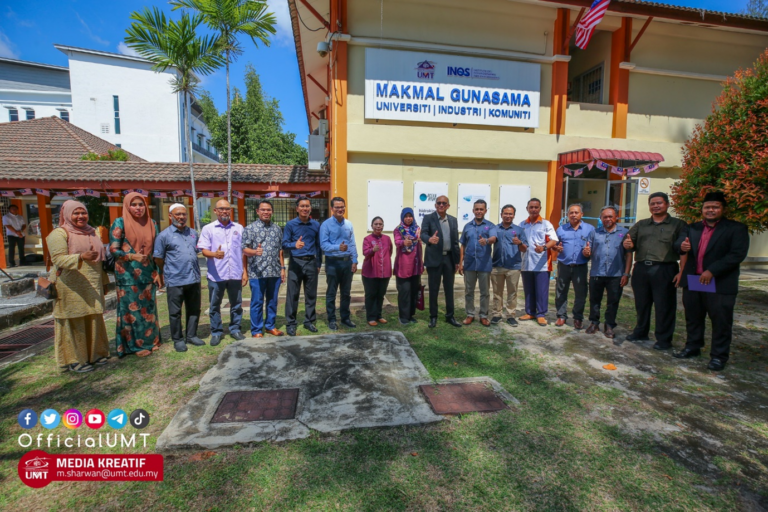
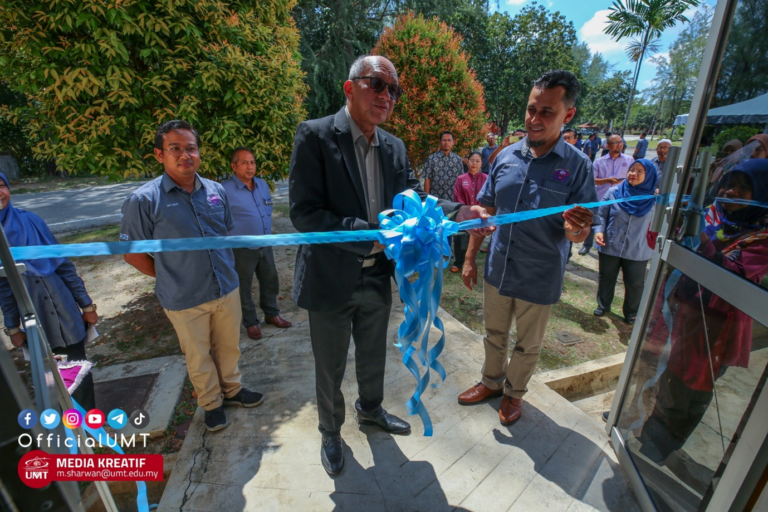
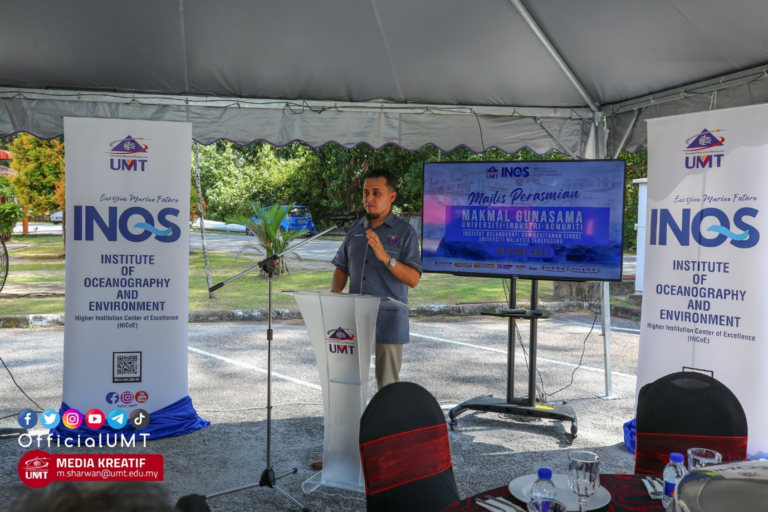
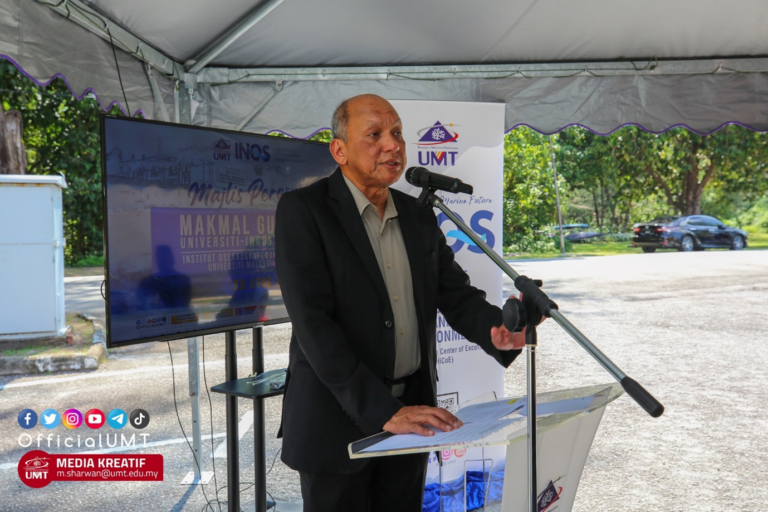
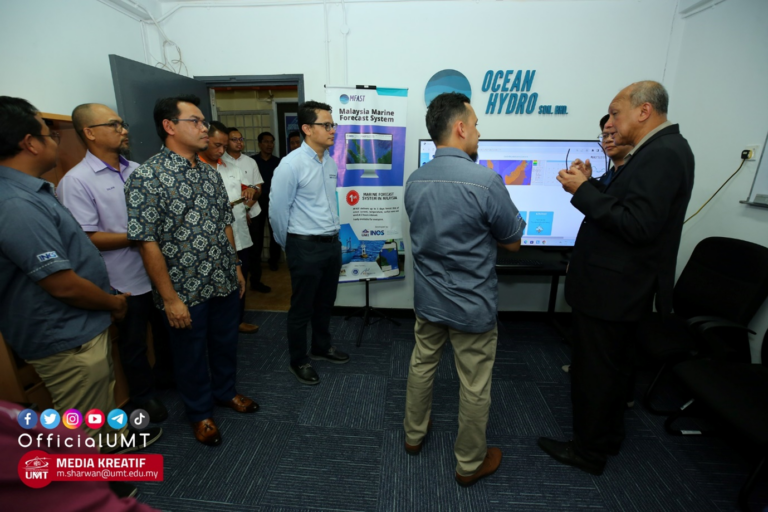
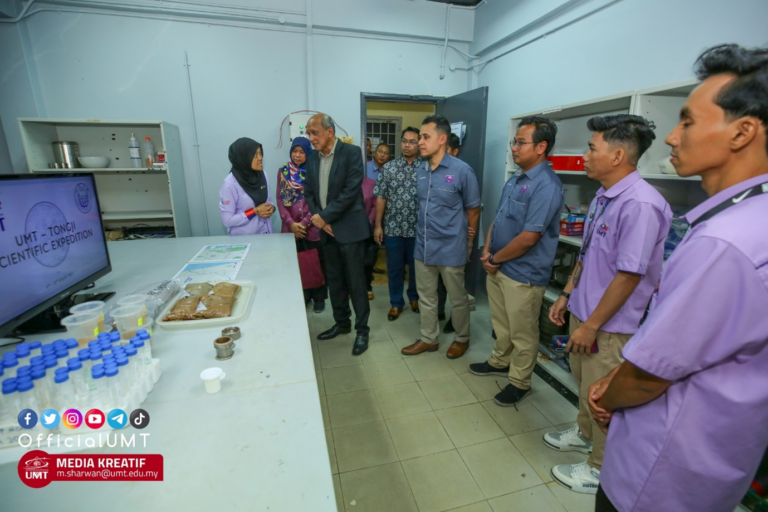
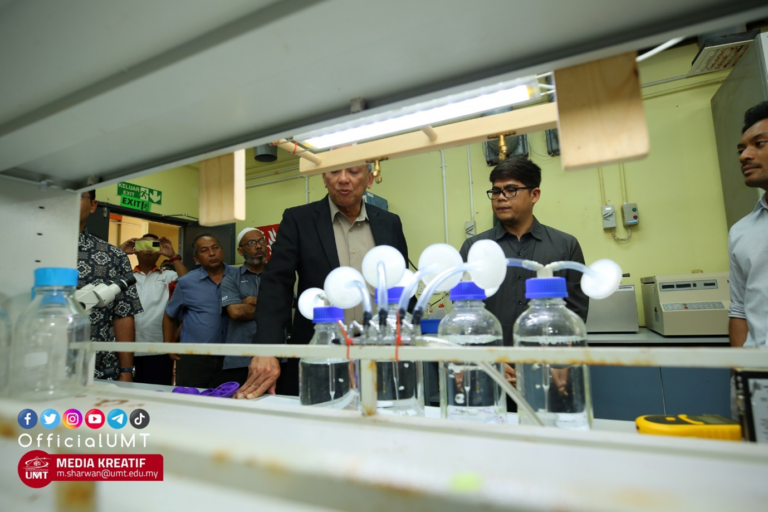
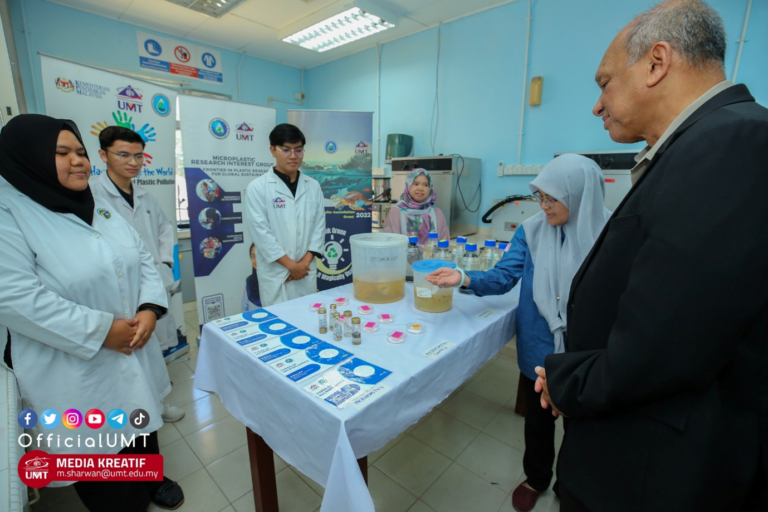
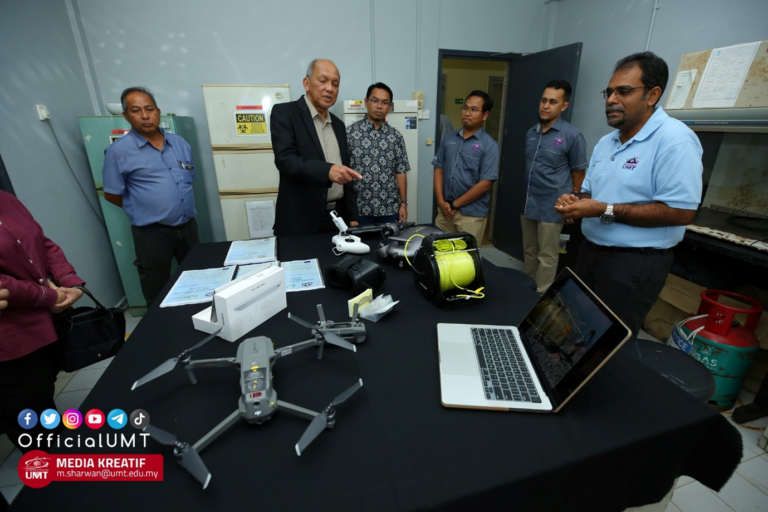
In a momentous event that gathered academia, industry, and the community, the Institute of Oceanography and Environment (INOS) marked a significant milestone with the inauguration of the University-Industry-Community Collaborative Laboratory. Prof. Dr. Mazlan Abd Ghaffar, the Vice Chancellor of UMT, officiated the ceremony.
In his eloquent address, Prof. Dr. Mazlan Abd Ghaffar underscored UMT’s role as a leader in marine research and its pivotal position in addressing complex global challenges. He emphasised UMT’s strategic plan, prioritising research excellence, interdisciplinary collaboration, and technological innovation. This plan positions UMT as a leading university in marine sciences, nationally and recognised globally, and highlights the institution’s dedication to cultivating outstanding researchers through lifelong learning opportunities.
Prof. Ts. Dr. Mohd Fadzil bin Mohd Akhir, Director of INOS, outlined INOS’ vital role in advancing marine research. INOS was officially designated as a Center of Excellence in Marine Science by the Malaysian government, and it has been recognised as a Higher Institution Center of Excellence (HICoE) in marine science by the Ministry of Higher Education (KPT). This accolade makes INOS the seventh HICoE in Malaysia and the sole Center of Excellence in oceanography and marine science, focusing on marine ecosystems and biodiversity.
A Tripartite Collaboration Unveiled
The heart of the event was the unveiling of the University-Industry-Community Collaborative Laboratory. This groundbreaking initiative facilitates collaboration among academia, industry, and the community, aiming to drive innovation and address pressing issues. The laboratory is more than a physical space; it symbolises a commitment to shared knowledge, expertise, and resources to create practical solutions. It is a platform for cross-disciplinary research that offers holistic answers to complex challenges.
The speeches emphasised that collaboration among universities, industries, and communities forms the bedrock for sustainable development. UMT has firmly positioned itself to lead the charge in this endeavour. By creating spaces and opportunities for knowledge sharing, expertise exchange, and resource pooling, UMT is building networks that effectively channel innovation to address contemporary challenges. The University-Industry-Community Collaborative Laboratory is poised to become a hub for transformative research, fostering partnerships that will lead to practical, real-world solutions.
As we progress, this laboratory represents a beacon of hope, a symbol of progress, and a testament to what can be achieved when academia, industry, and the community unite for a common purpose. With this powerful tripartite collaboration, UMT and INOS are poised to make significant strides in marine research and its applications, benefiting society and ecosystems.