Favourite Spot for Nesting
One of the beaches is located at Rantau Abang, a small village 80 kilometres away from Kuala Terengganu. The beach has become a favourite spot for the turtles to land and nest.
Rantau Abang beach has been known as one of the best places in the world for leatherback turtle nesting since the 1960s. Tourists have herded the beach to get a closer look at the giant turtles with the scientific name Dermochelys coriacea. Leatherback turtles are named for their shell, which is leatherlike rather than hard like other turtles.
In the 1980s, the state government made sea turtle watching more accessible to the general public, resulting in an influx of tourists from all over the world who are eager to look up close these critically endangered animals.
A government reserve for hatcheries was established to allow hawkers to set up kiosks and capitalize on the turtle obsession by the public.
The locals have their own version of why the leatherback turtles would only come to nest at Rantau Abang beach. The turtles are said to be attracted by a mysterious stone on a little hill at a village off the coast. The stone, called Batu Penyu, which means turtle stone, is also popular among tourists.
In some parts of the world, turtles are revered and respected, so there are many stories and folklore involving the unique sea creatures. In Terengganu, some turtle-related stories have been passed down from a generation to another throughout the years. For example, the number of sea turtle nests and eggs produced during a season can be estimated by the elderlies based on the number of coconuts produced.
Modern science can now explain this by linking the effects of La Nina and El Nino, the hot and cold climate patterns, to the ocean’s annual productivity. The higher the ocean’s productivity is during La Nina, the higher the number of sea turtle eggs produced.
Initiative by UMT SEATRU
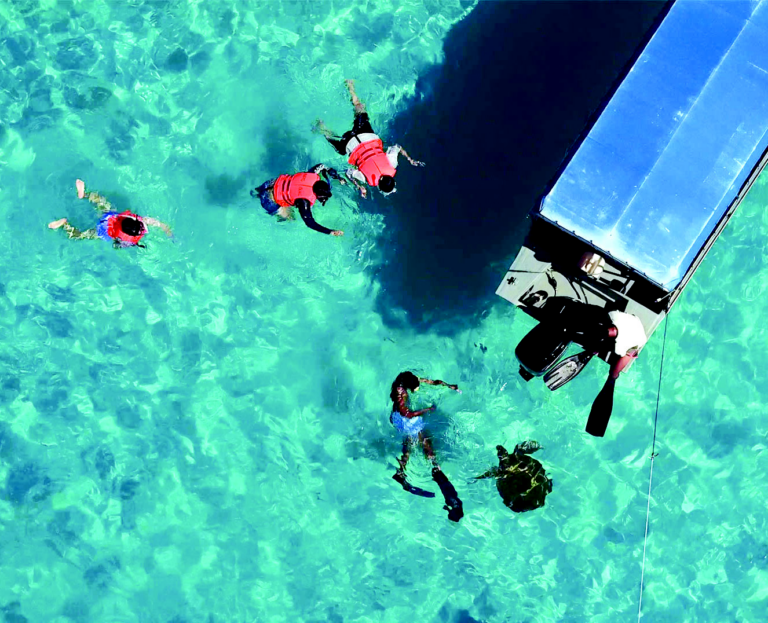
In response, the Sea Turtle Research Unit (SEATRU) of UMT’s Institute of Oceanography and Environment has taken the initiative to begin assessing the health conditions of the sea turtles that roam around Teluk Dalam at Redang Island.
The research entails several activities, such as exterior examination, measuring of body size and weight, and blood collection for conducting a health analysis.
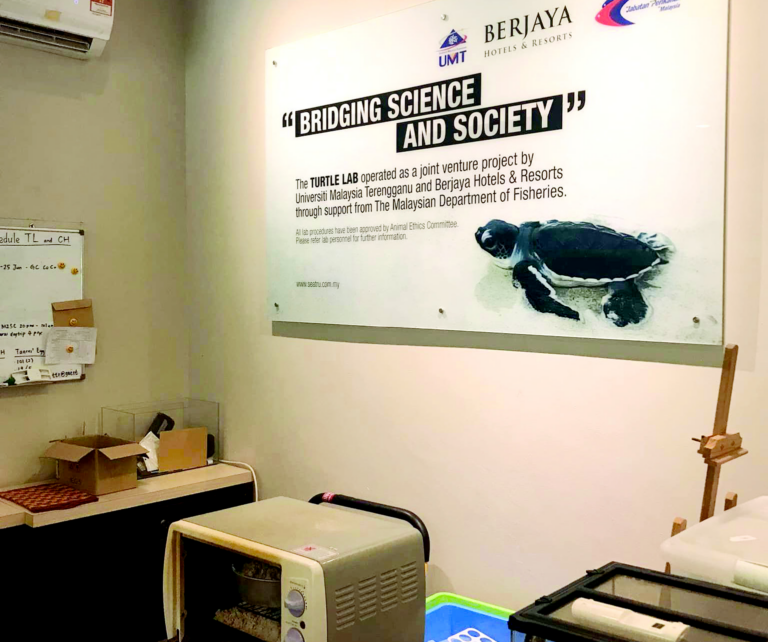
The Chagar Hutang Turtle Sanctuary is another noteworthy attraction at Pulau Redang. Several scientific discoveries have been made at this research facility. The sanctuary is an example of how preserving sea turtle nesting grounds may provide educational opportunities for the surrounding communities, encouraging a more environmentally responsible behaviour.
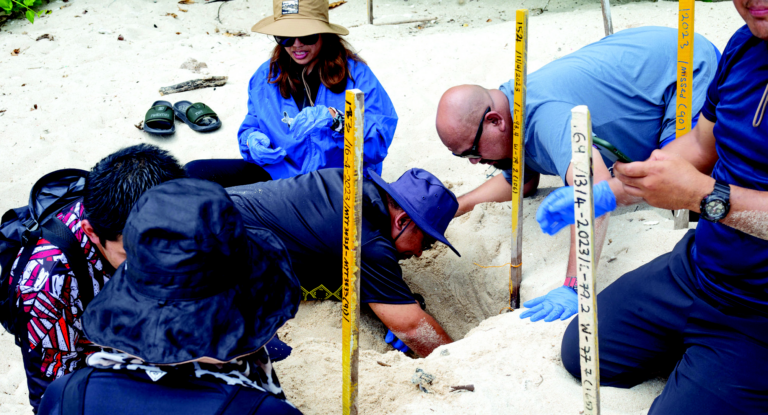
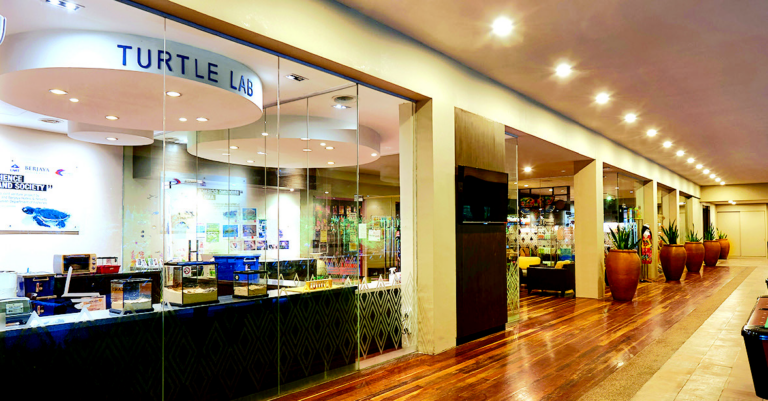
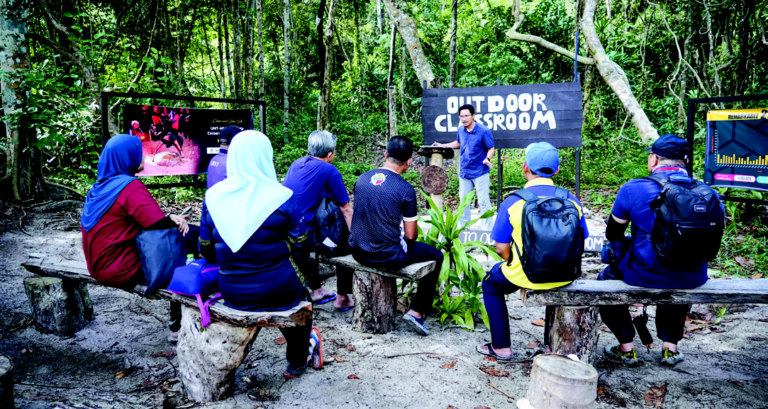
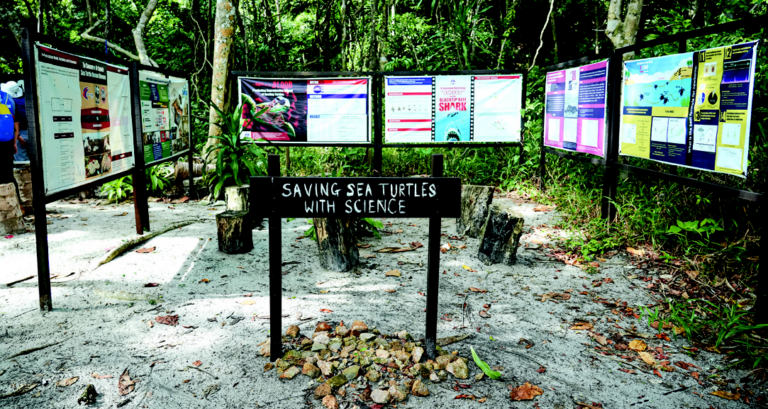
At the sanctuary, a dedicated area for learning about turtle science has been created. Tourists may consider going to the national science gallery, a turtle science gallery in a natural setting. A science communicator will walk the visitors through the entire exhibition. Tourists can also participate in nest analysis alongside the turtle rangers. One of the highlight moments is when visitors have the opportunity to hold the newly hatched baby turtles in the nest.
The public can gain extra experience by enrolling in a one-week volunteer programme and interacting with sea turtle biologists at this research station. Regardless of their background, people can serve as turtle rangers. They will create a once-in-a-lifetime memory of doing night-time beach patrol, measuring nesting mothers, watching thousands of sea turtle babies crawl down the beach, and participating in leisure activities with newly met volunteer friends.
The sea turtles have always been associated with Terengganu and have played an important part in making the state one of the preferred holiday destinations. The presence of the unique creatures on its beachers has allowed Terengganu to offer an extensive range of sea turtle experience tourism products, providing income for the state as well as the locals.
For as long as the turtles choose to come ashore in Terengganu, there will be visitors flocking the beaches, to witness something not easily found elsewhere—the sea turtles laying their eggs.