Strategic Focus Group Discussion (FGD):
Coastal Disaster Management and Coastal Erosion Index Data Coordination
By INOS
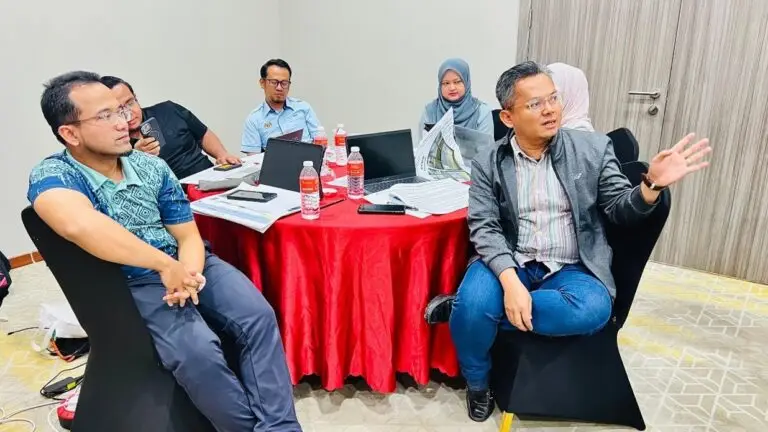
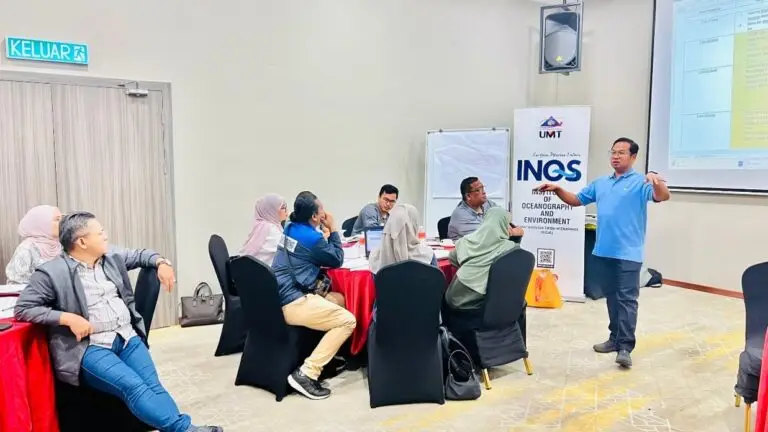
The Strategic Focus Group Discussion (FGD) on Coastal Disaster Management and Harmonisation of Coastal Erosion Index Data was successfully held from 24 to 26 July 2025 in the Seminar Room at Swiss-Belhotel, Kuantan. This programme aimed to bring experts from various fields across universities, government and industry to exchange knowledge and ideas to improve management and disaster preparedness for coastal erosion in Malaysia.
The main focus of the discussion was a review of two important references used in coastal planning, namely the National Coastal Erosion Study (NCES) 2015 and the National Coastal Zone Physical Plan 2 (RFZPPN-2). The discussion aimed to understand the differences between both approaches and identify areas where the two references can be improved and used together to support better coastal management.
The discussion was moderated by Associate Professor Dr. Effi Helmy Ariffin. There were participants present from different organisations such as Universiti Malaysia Terengganu (UMT), Universiti Malaya (UM), Universiti Tun Hussein Onn Malaysia (UTHM), International Islamic University Malaysia (IIUM), National Hydraulic Research Institute of Malaysia (NAHRIM), Department of Irrigation and Drainage (JPS), Politeknik Nilai and RYE Engineering Sdn. Bhd. To make the discussion more intensive, the participants were divided into three groups, from the northern, southern and eastern coasts of Peninsular Malaysia.
Throughout the three days of discussions, the participants shared their experiences and opinions on various coastal erosion problems, such as the causes of shoreline changes, the effects of coastal development, problems faced by coastal people, possible mitigation measures, and the possibilities of nature-based solutions for mitigating the problem.
One of the key issues discussed was the distinction between NCES 2015 and the RFZPPN-2. It became clear that NCES concentrates predominantly on the physical processes related to the coastline, whereas RFZPPN-2 takes into account additional factors such as the environment, infrastructure, socio-economic characteristics and others. In turn, both methods were considered strong and could serve as complements to one another.
Coastal erosion is a complex phenomenon affected by many different factors such as natural and man-made actions. The waves, currents, monsoon seasons and the changes in sea level remain constant in the process of influencing the coast. In contrast, coastal development, land reclamation, urbanisation and changes in land use may also contribute to the problem.
There were also discussions about the need for choosing appropriate methods of coastal protection. Althhough engineering measures such as seawall construction and rock revetments are important in protecting critical sections, nature-based methods could be considered in coastal management processes. Both approaches could be integrated into the management process in order to balance protection and conservation of the environment.
Among other recommendations, it is recommended to harmonise the assessment process of NCES 2015 and RFZPPN-2, to have consistent coastal erosion indicators, and improve the flow of information among the concerned parties. It was agreed that there is a need to develop an effective approach to the assess the risk of coastal erosion.
Overall, the FGD successfully brought together experts from different sectors to exchange knowledge and discuss future improvements in coastal erosion assessment and management. The recommendations from the discussion will serve as important input towards enhancing coastal planning and decision-making in Malaysia.