
Background

The Institute of Oceanography (INOS) is a premier center of excellence in Malaysia that focuses its activities on oceanic and marine related research and post-graduate training.

INOS has a long and strong tradition in marine science and oceanographic research via the grouping at INOS of highly trained scientists from the former Faculty of Fisheries and Marine Science, UPM.

Recommended by the Intergovernmental Oceanographic Commission of UNESCO, the institute is accorded official status as a center of excellence by the Malaysian Government in April 2001.

INOS aims to be a leading regional center of research, post-graduate studies as well as the reference center for marine and its related environment with special emphasis on the South China Sea and its related ecosystems.

A Special Meeting of the Senate to-46 times a session on 29 March 2011 (Minute 1/46/2011) ago have agreed to establish an Institute of Oceanography and Environmental (INOS) in force on that date. This decision was taken to meet the current requirements for the excellence of the institute. Accordingly, the Institute of Oceanography (INOS), now known as the Institute of Oceanography and Environment / Institut Oseanografi dan Sekitaran.

Abstract

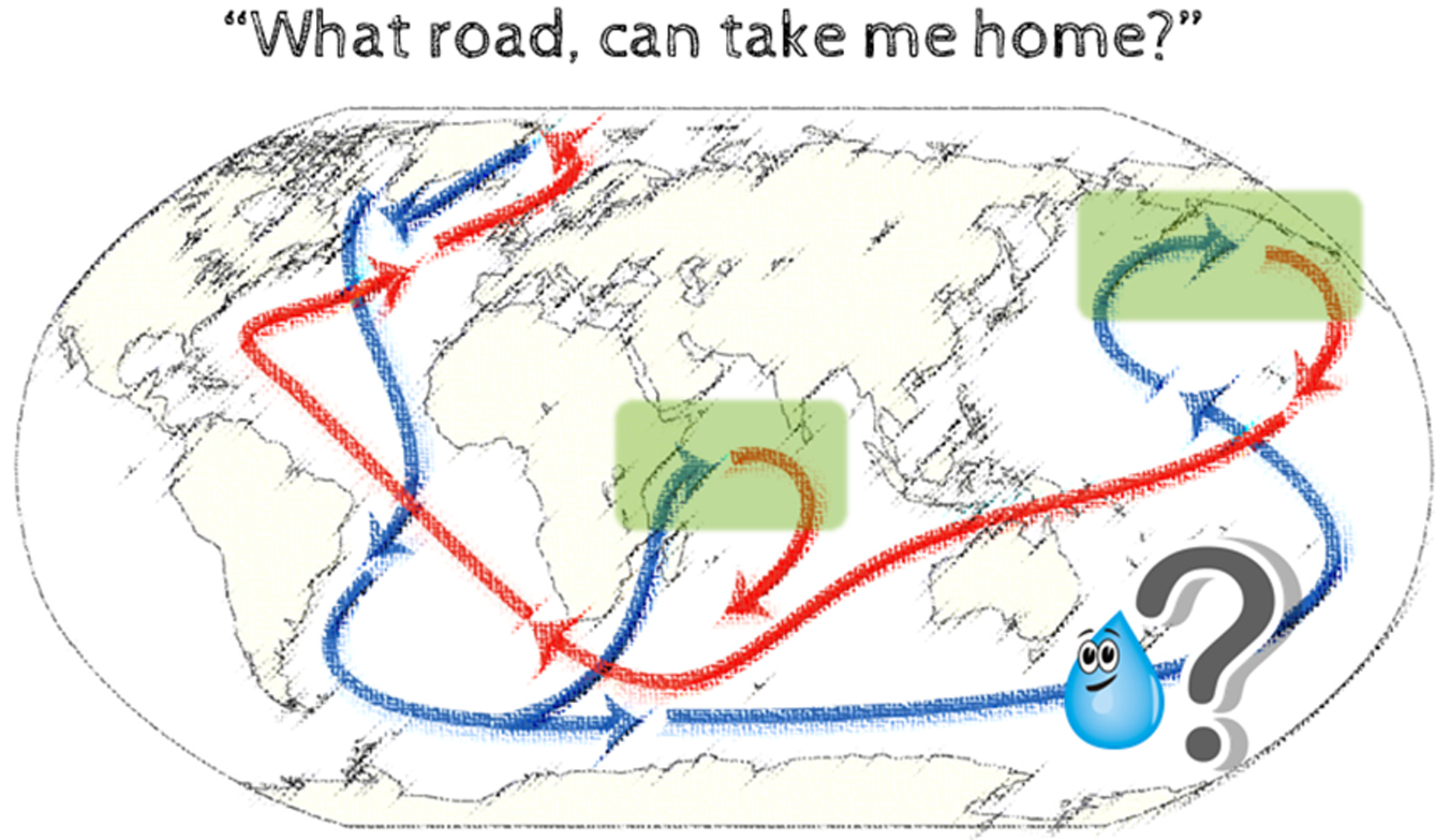
While the sinking formation of Antarctic Bottom Water (AABW) is well understood, how this bottom water "returns home" through upwelling within ocean basins, particularly the Indo-Pacific, remains shrouded in uncertainty. In the 1960s, Munk’s classic "Abyssal Recipes" theory sought to explain these abyssal flows, yet later observations exposed two significant conflicts with real-world data. In 2016, Ferrari, McDougall, and colleagues proposed the "Towards a New Abyssal Recipe" framework, introducing bottom boundary layer (BBL) upwelling to address Munk’s inconsistencies. Drawing on recent evidence of a potential cooling trend in the deep ocean, this talk revisits these debates, offering a fresh interpretation of Munk’s discrepancies and proposing a new mechanism for abyssal upwelling in the Indo-Pacific. It contributes to the ongoing quest to unravel how bottom waters complete their global journey.
Presented by: Prof. Dr. HAN Lei
Affiliation: China-ASEAN College of Marine Science, Xiamen University, Malaysia
Address: Sepang, Selangor, Malaysia


This will close in 0 seconds