
Saving Lives with Science: INOS Experts Assist in Kemaman Search and Rescue

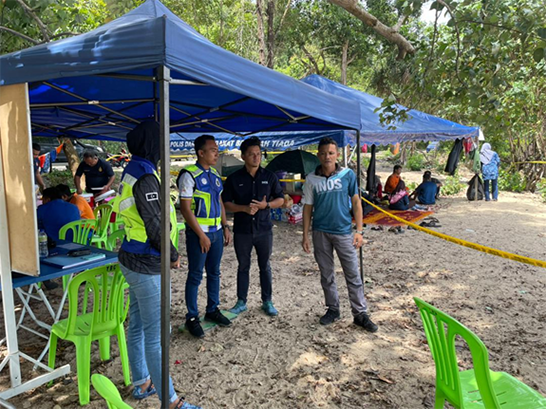
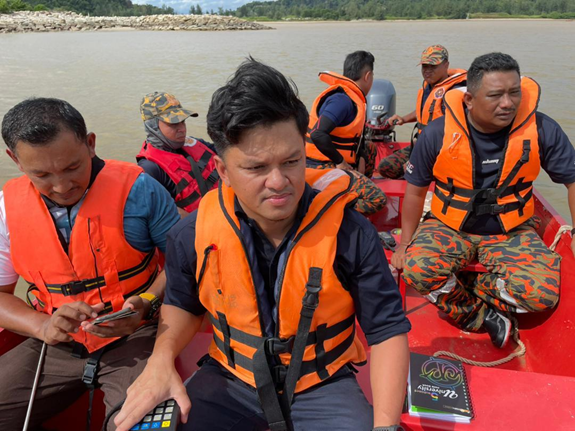
The involvement of three INOS oceanographers in the search and rescue (SAR) operation for a missing child, who was feared to have drowned near the Kuala Kemaman river on 15 November 2022, testifies to the significance of oceanography expertise in critical situations. The three oceanography experts were Shukri Arsad, Che Mohd Kamarul Anuar Che Abdullah and Tan Hock Seng.

The Director of the Terengganu Fire and Rescue Department, Md. Hilman Abd. Rashid acknowledged the necessary service of the oceanography experts from UMT in the SAR operation in order to identify the location of the victim due to the constantly-changing and unpredictable water movement. The river mouth was known to have complex currents with the convergence of seawater and river, making the SAR operation difficult without the knowledge of oceanography expertise.

Oceanography encompasses the ocean’s physical, chemical, biological, and geological aspects. It involves the study of ocean currents, waves, tides, and the movement of water masses, which are all crucial in understanding the dynamics of the ocean and the potential dangers it poses. In the case of SAR operation, INOS oceanographers can provide valuable information on the movement of water, which can aid in identifying the victim’s location.

Furthermore, the involvement of these oceanography experts in the SAR operation has also highlighted the importance of collaboration in handling critical and emergency situations.

Abstract

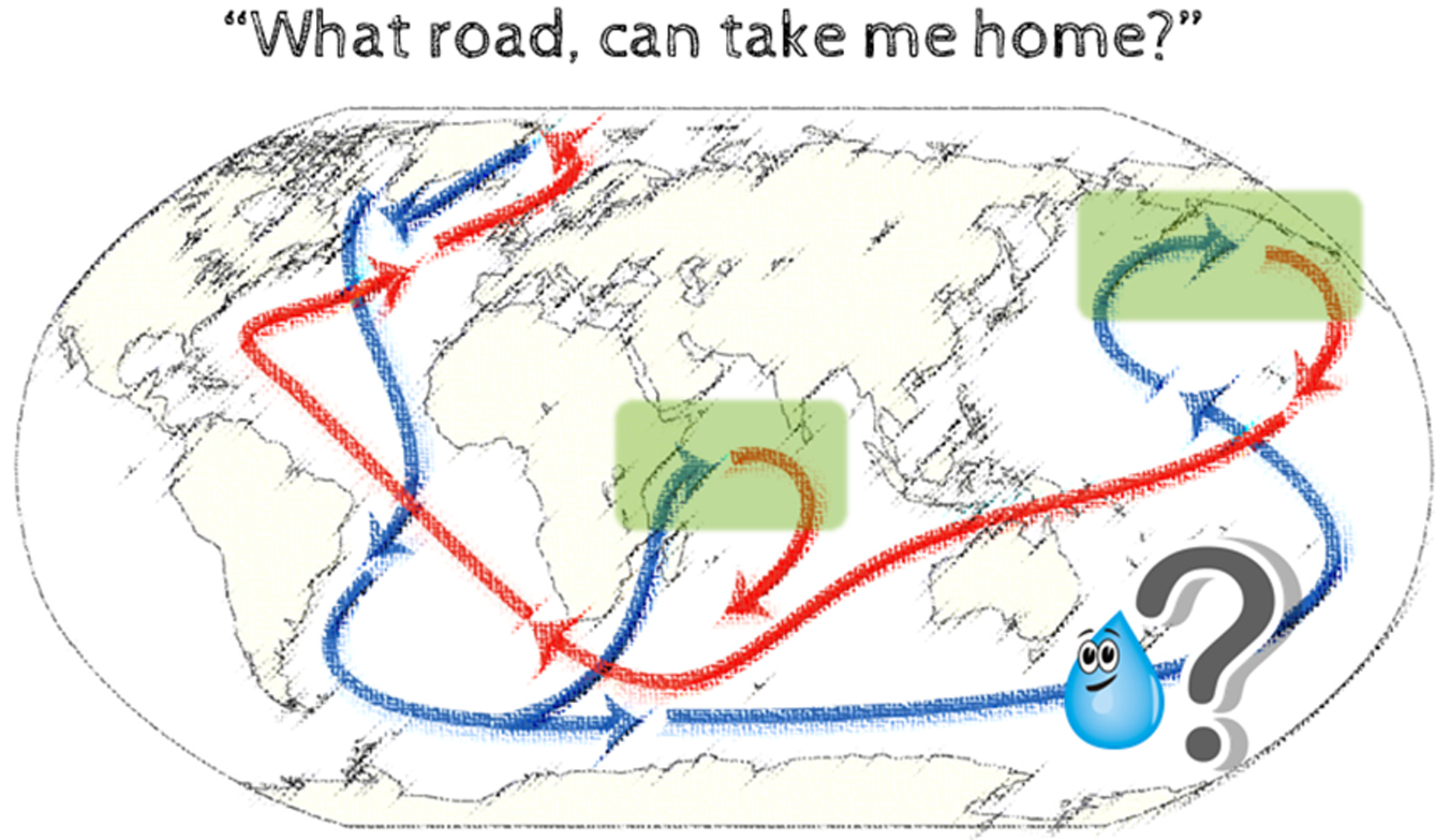
While the sinking formation of Antarctic Bottom Water (AABW) is well understood, how this bottom water "returns home" through upwelling within ocean basins, particularly the Indo-Pacific, remains shrouded in uncertainty. In the 1960s, Munk’s classic "Abyssal Recipes" theory sought to explain these abyssal flows, yet later observations exposed two significant conflicts with real-world data. In 2016, Ferrari, McDougall, and colleagues proposed the "Towards a New Abyssal Recipe" framework, introducing bottom boundary layer (BBL) upwelling to address Munk’s inconsistencies. Drawing on recent evidence of a potential cooling trend in the deep ocean, this talk revisits these debates, offering a fresh interpretation of Munk’s discrepancies and proposing a new mechanism for abyssal upwelling in the Indo-Pacific. It contributes to the ongoing quest to unravel how bottom waters complete their global journey.
Presented by: Prof. Dr. HAN Lei
Affiliation: China-ASEAN College of Marine Science, Xiamen University, Malaysia
Address: Sepang, Selangor, Malaysia



This will close in 0 seconds