

Risk Management: Ocean Forecast System

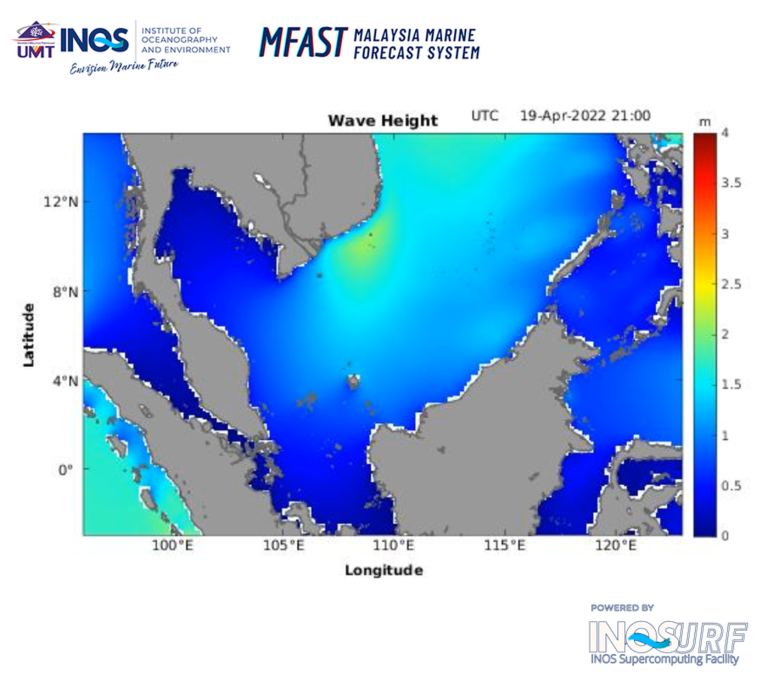
Malaysia Marine Forecast System (MFAST) with an aim to provide reliable ocean forecast data has been developed to provide a high-
resolution Ocean Forecast System (OFS) to empower us for early preparation for maritime incidents due to hazards and disasters.

Nowadays, the society is largely dependent on the commercial OFS to predict the condition of the ocean. Nevertheless, the accuracy of this OFS is often doubtful in terms of realibility especially at the local scale. One of the key reasons is the resolution of the model is too scarce.

The MFAST is developed under the collaboration between Universiti Malaysia Terengganu (UMT) and First Institute of Oceanography (FIO), China, which is a subsidiary product of the Ocean Forecasting Demonstration System (OFDS) for Southeast Asian Water. OFDS is one of the Southeast Asian Global OceanObserving System (SEAGOOS) pilot projects under the auspices of the IOC Sub-Commissions for the Western Pacific (IOC/WESTPAC).

MFAST is the first OFS in Malaysia to have a high-resolution ocean forecast data developed based on wave-tide-circulation coupled model established by the Laboratory of Marine Sciences and Numerical Modelling (MASNUM), FIO.

MFAST delivers up to 5 days forecast data of ocean current, temperature, surface wave and wind between 3 °S – 15 °N and 96 – 123 °E at 3 hours interval.

MFAST offers comprehensive, continuous, and reliable forecast data for marine-related activities, facilitating optimum operations in the marine environment, such as marine surveillance, navigation, search and rescue operations, recreation, and scientific exploration in our region

Abstract

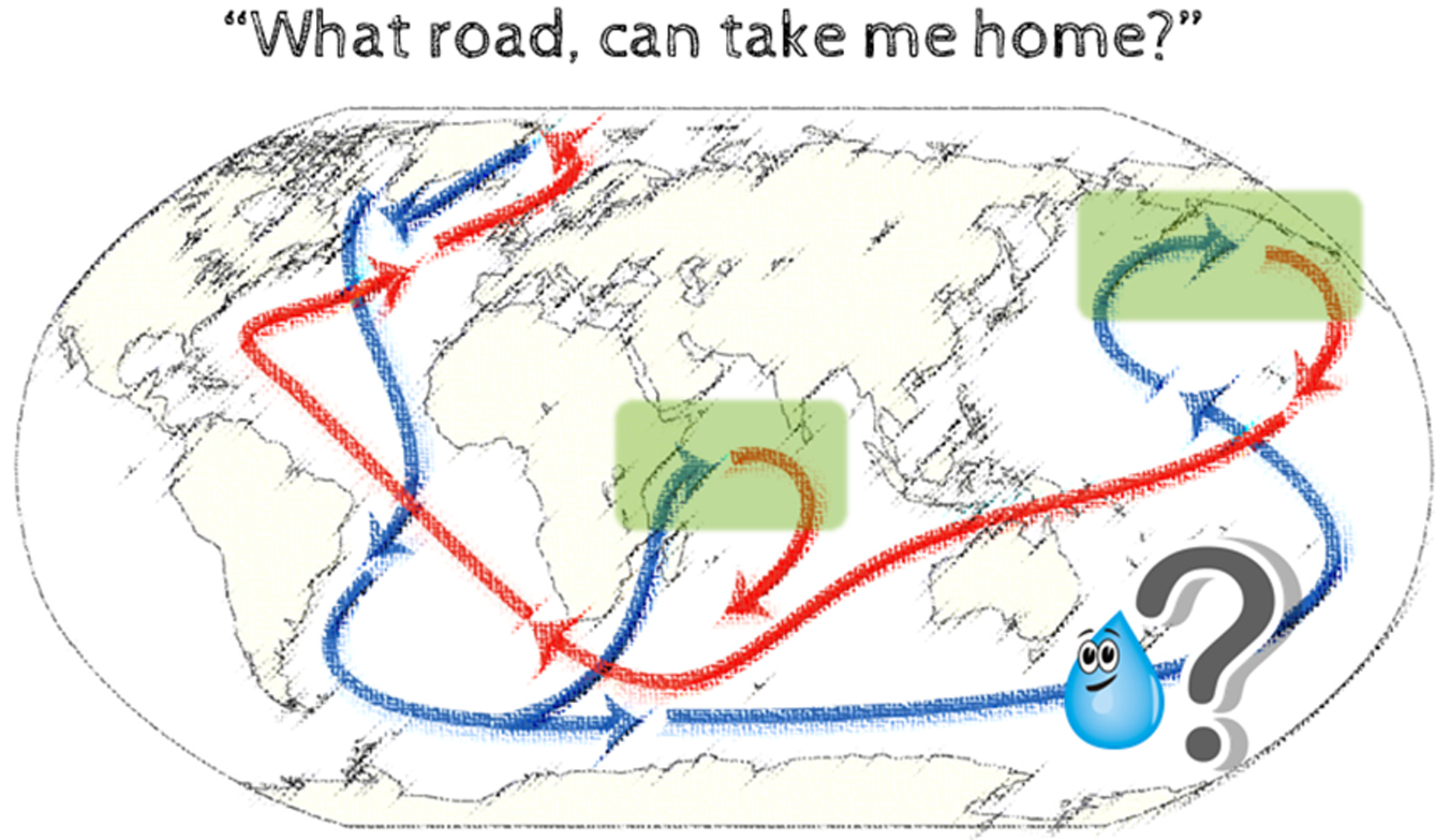
While the sinking formation of Antarctic Bottom Water (AABW) is well understood, how this bottom water "returns home" through upwelling within ocean basins, particularly the Indo-Pacific, remains shrouded in uncertainty. In the 1960s, Munk’s classic "Abyssal Recipes" theory sought to explain these abyssal flows, yet later observations exposed two significant conflicts with real-world data. In 2016, Ferrari, McDougall, and colleagues proposed the "Towards a New Abyssal Recipe" framework, introducing bottom boundary layer (BBL) upwelling to address Munk’s inconsistencies. Drawing on recent evidence of a potential cooling trend in the deep ocean, this talk revisits these debates, offering a fresh interpretation of Munk’s discrepancies and proposing a new mechanism for abyssal upwelling in the Indo-Pacific. It contributes to the ongoing quest to unravel how bottom waters complete their global journey.
Presented by: Prof. Dr. HAN Lei
Affiliation: China-ASEAN College of Marine Science, Xiamen University, Malaysia
Address: Sepang, Selangor, Malaysia



This will close in 0 seconds