

Marine Pollution & Chemical Oceanography Laboratory (OKP)

The Marine Pollution & Chemical Oceanography Laboratory (OKP) is a MS ISO/IEC 17025 accredited laboratory since 2014 and we are committed in providing the best services and assistance for chemical analysis and testing. Being an integral part of the academic environment of Institute of Oceanography & Environment (INOS) and the University Malaysia Terengganu (UMT), we played an important role in technical services for UMT’s researchers and advising graduate student in areas of chemical sciences and instrumentation. The laboratory also hosts Practical Students who gain research experience during their appointments while also providing an influx of new ideas.

As chemical oceanographers, we conduct and participated in numerous oceanographic voyages and cruises for the purposes in collecting marine samples and the data obtained helps in understanding the status of our ocean’s health from chemistry perspectives.

Laboratory Equipment:

  1. UV-Vis Spectrometer
  2. TOC Analyzer
  3. Portable XRF
  4. Particle Size Analyzer (PSA)
  5. Ion Chromatography
  6. GC-MS
  7. GC-FID
  8. Gamma Ray Hypergermanium Detector
  9. Alpha Counter Spectrometry
  10. Teflon Bomb Digester Set
  11. Mercury Analyzer
  12. Nutrient Auto Analyzer

ChM. Mahamad Nasir bin Abdullah

Laboratory Manager

Senior Science Officer
Email: asyeir@umt.edu.my
Tel: +6096683546
Fax: +096692166

Tan Hock Seng

Senior Science Officer
Email: hockseng@umt.edu.my
Tel: +609-6683825
Fax: +6096692166

Nor Hazinah binti Asbar

Senior Assistant Science Officer
hazinah@umt.edu.my
Tel: +6096683458
Fax: +096692166
 

Abstract

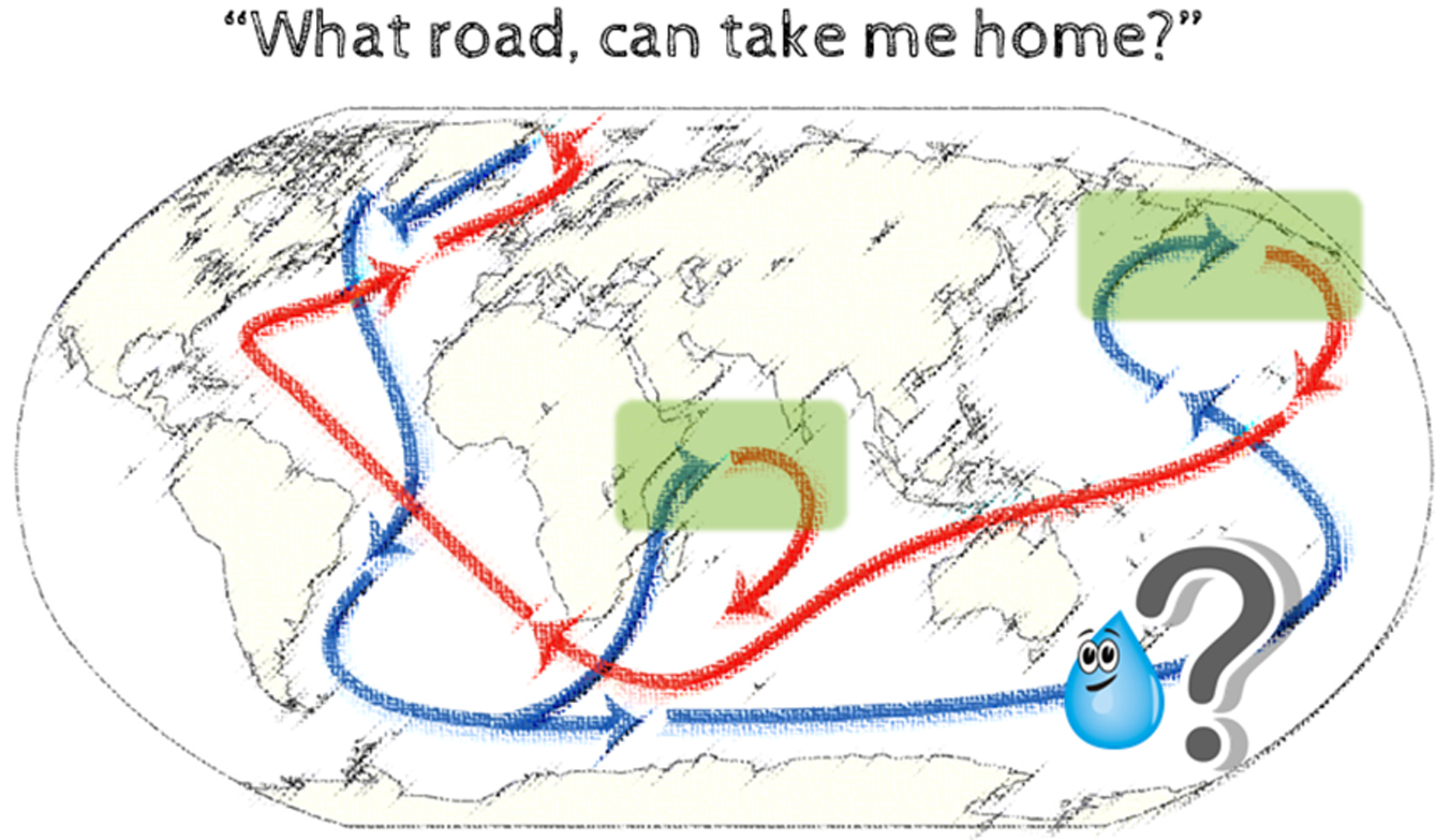
While the sinking formation of Antarctic Bottom Water (AABW) is well understood, how this bottom water "returns home" through upwelling within ocean basins, particularly the Indo-Pacific, remains shrouded in uncertainty. In the 1960s, Munk’s classic "Abyssal Recipes" theory sought to explain these abyssal flows, yet later observations exposed two significant conflicts with real-world data. In 2016, Ferrari, McDougall, and colleagues proposed the "Towards a New Abyssal Recipe" framework, introducing bottom boundary layer (BBL) upwelling to address Munk’s inconsistencies. Drawing on recent evidence of a potential cooling trend in the deep ocean, this talk revisits these debates, offering a fresh interpretation of Munk’s discrepancies and proposing a new mechanism for abyssal upwelling in the Indo-Pacific. It contributes to the ongoing quest to unravel how bottom waters complete their global journey.
Presented by: Prof. Dr. HAN Lei
Affiliation: China-ASEAN College of Marine Science, Xiamen University, Malaysia
Address: Sepang, Selangor, Malaysia



This will close in 0 seconds