Integrated Data Analysis Approach for Coastal Upwelling Studies
By Zuraini Zainol
The IOC/OTGA/INOS course, held online in September 2023, offered a deep dive into coastal upwelling studies, a crucial aspect of oceanography. Led by esteemed trainers Prof. Ts. Dr. Mohd Fadzil Mohd Akhir, Dr. Zuraini Zainol, Mr. Afifi Johari, and Mr. Winfred Marshal, the course aimed to enhance understanding and analytical skills related to upwelling phenomena, which, despite covering only 1% of the world’s oceans, contribute significantly to global fisheries.
Upwelling is characterized by the movement of deep, nutrient-rich waters to the ocean’s surface, leading to cooler, denser waters with low dissolved oxygen and high salinity. This process is critical not only for ocean productivity but also for understanding broader ecological dynamics, including habitat health and fisheries management.
The course attracted 146 applicants from 33 countries, but due to time zone constraints, 20 participants from Malaysia, Indonesia, Thailand, the Philippines, India, Sri Lanka, and Bangladesh were selected. These participants engaged in a comprehensive learning experience designed to deepen their knowledge and skills in analyzing upwelling regions.
The training was structured to provide a robust understanding of upwelling sites through various datasets. Participants were taught to integrate field data, satellite data, and wind data to analyze the unique characteristics of upwelling regions. The primary learning goals included:
- Understanding Upwelling Sites: Participants learned to describe existing upwelling regions using available datasets, enhancing their comprehension of the physical-biological interactions within these areas.
- Data Integration: The course emphasized the importance of combining different data sources, including field, satellite, and wind data, to provide a holistic view of upwelling dynamics.
- Data Analysis: Participants were guided through simple analyses of integrated data to identify the special features of specific upwelling sites.
Participants expressed overwhelmingly positive feedback, underlining several significant elements that contributed to their enriched learning experience. Firstly, the course effectively instilled new data exploration skills among the attendees, boosting their confidence and ability to navigate various platforms, thereby broadening their research capabilities. Additionally, a notable highlight was the introduction and training in ODV software, which many participants found invaluable. This tool has not only enhanced their analytical toolkit but is also anticipated to be highly beneficial in their future research endeavors.
In conclusion, the IOC/OTGA/INOS course on Integrated Data Analysis for Coastal Upwelling Studies provided a comprehensive and practical learning experience, equipping participants with the knowledge and tools to advance their research and understanding of upwelling regions. The course’s success is reflected in the positive feedback from participants, who now possess enhanced skills and confidence in exploring and analyzing coastal upwelling data.
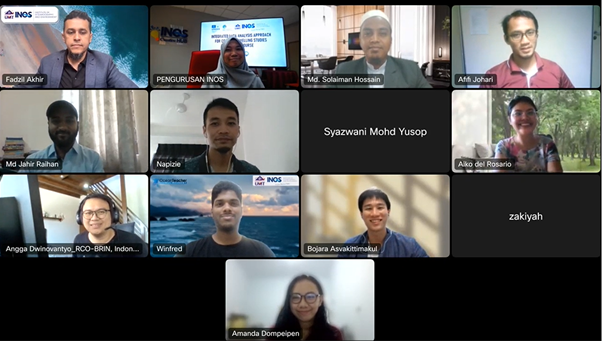
Among the participants of IOC/OTGA/INOS: Integrated Data Analysis Approach for Coastal Upwelling Studies.
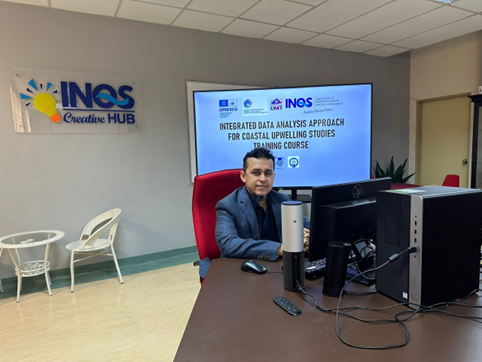
Prof. Ts. Dr. Mohd Fadzil Mohd Akhir, the principal lecturer of the training course.
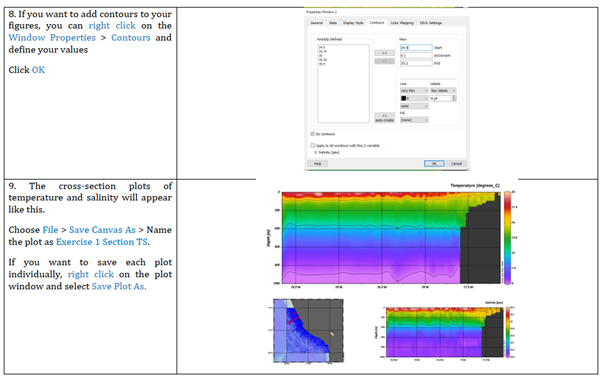
Tutorial on plotting the World Ocean Database (WOD) data using the Ocean Data View (ODV) software to observe the upwelling features.
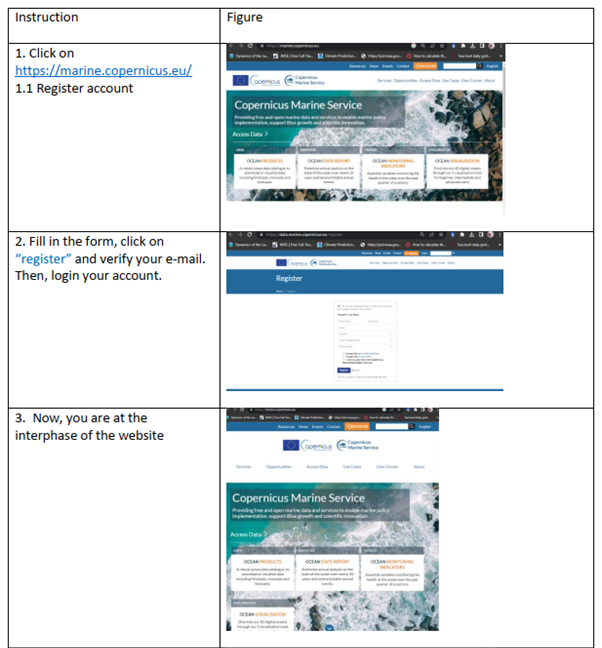
Tutorials on exploring the CMEMS data.