INOS-UMT Charts New Milestone in Ocean Exploration
with OceanX Mission Malaysia
By Maizah Mohd Abdullah (INOS / FSSM)
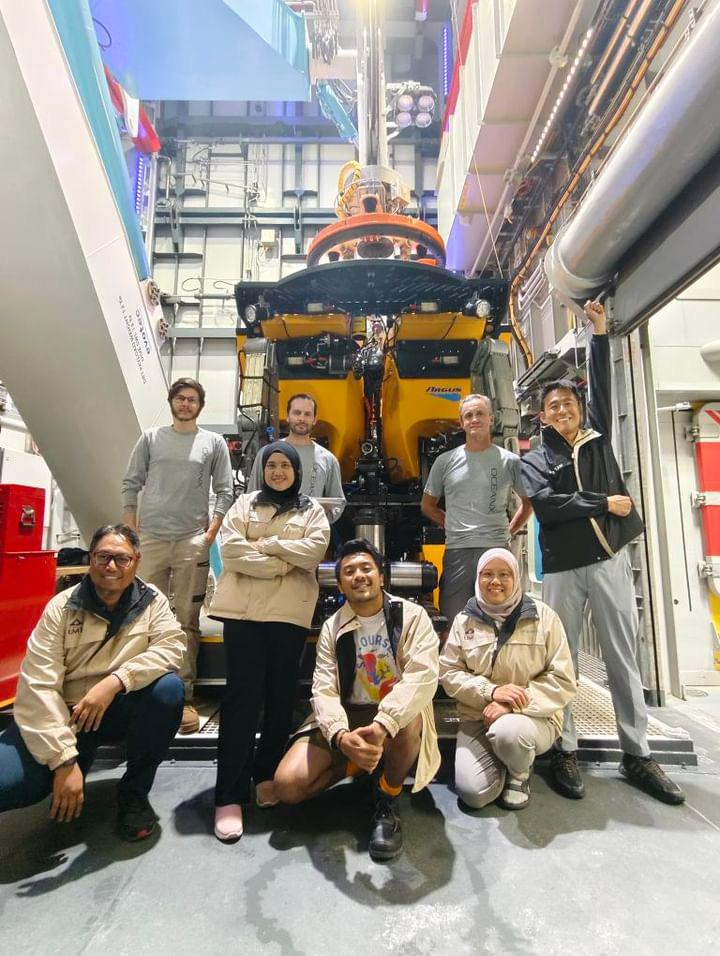
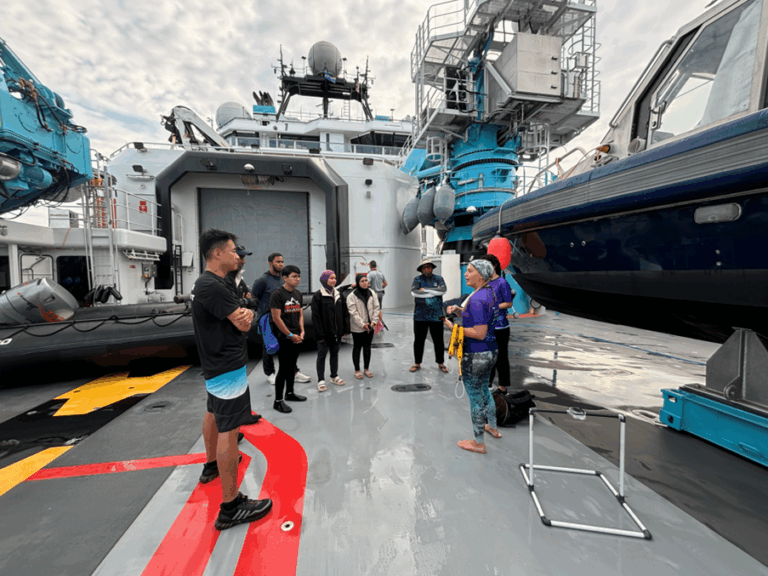
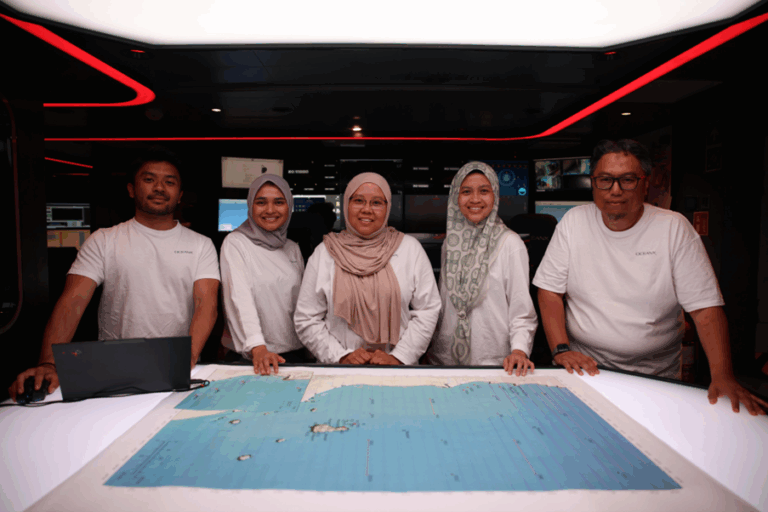
INOS-UMT has achieved a significant milestone in national marine research with the participation of scientists from INOS-UMT in OceanX Mission Malaysia. In this prestigious mission, UMT researchers are led by an INOS researcher representing the country in one of the world’s most advanced oceanographic expeditions.
Partnering with OceanX, a globally renowned organisation that integrates state-of-the-art technology, cutting-edge research, and world-class media for science communication, the mission brought Malaysia into the forefront of global ocean exploration.
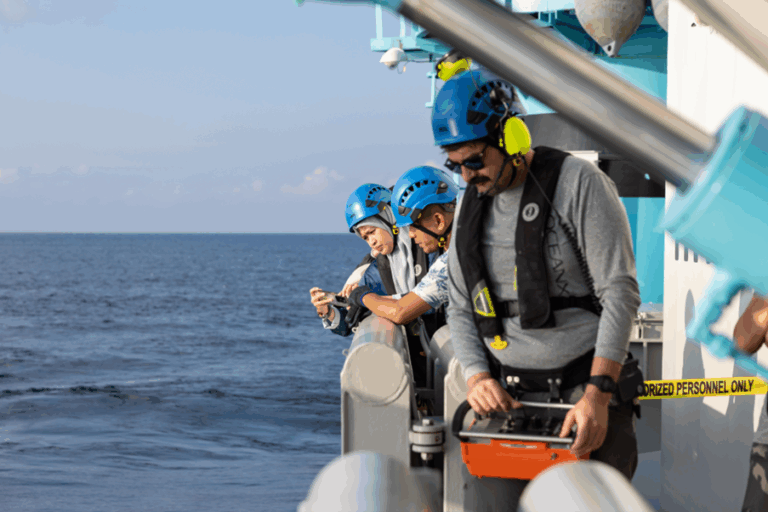
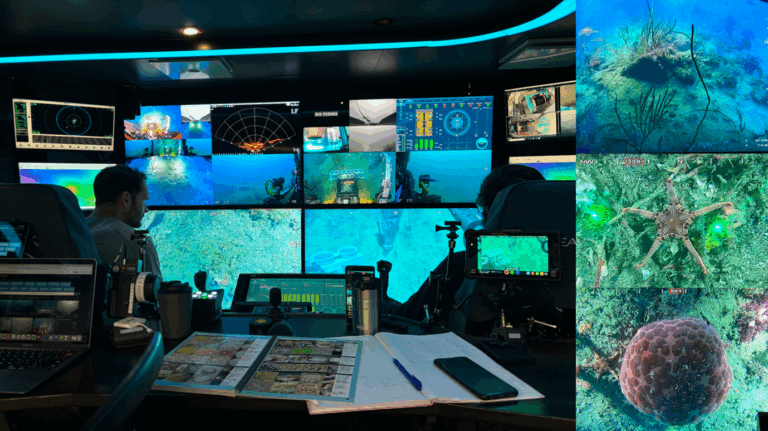
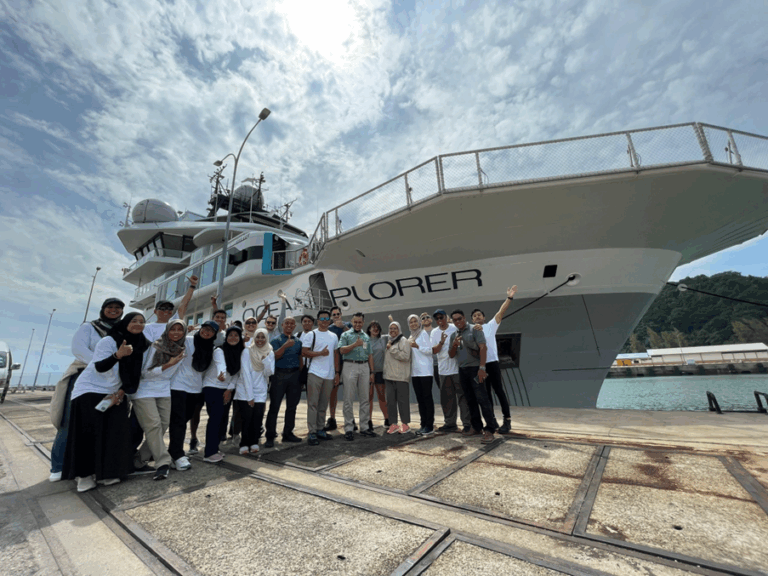
Operating from the highly sophisticated OceanXplorer vessel, the mission focused on various objectives, including elucidating the seascapes’ dynamics for shallow and mesophotic coral reefs. Mesophotic reef areas, located at depths greater than 30 metres, are often challenging to access due to their depth and the specialised equipment required for exploration. These reefs exist in the “twilight zone” of the ocean, where light levels are low, making traditional diving methods impractical. Benthic mesophotic zones are relatively understudied despite their ecological significance, necessitating innovative approaches to explore and document their biodiversity whereby cutting-edge technologies provide access to these remote and inaccessible habitats. In this mission, exploration of the mesophotic reefs was made possible using the ROV, and the mission has successfully discovered new sites of mesophotic reefs.
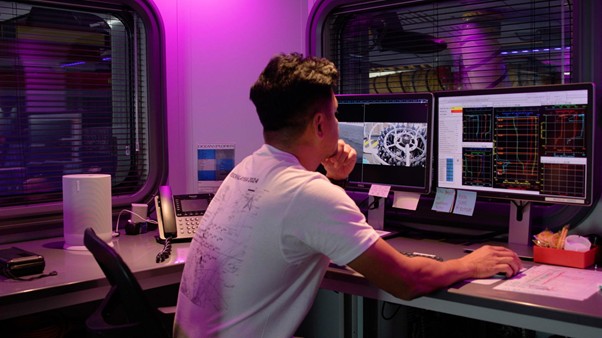
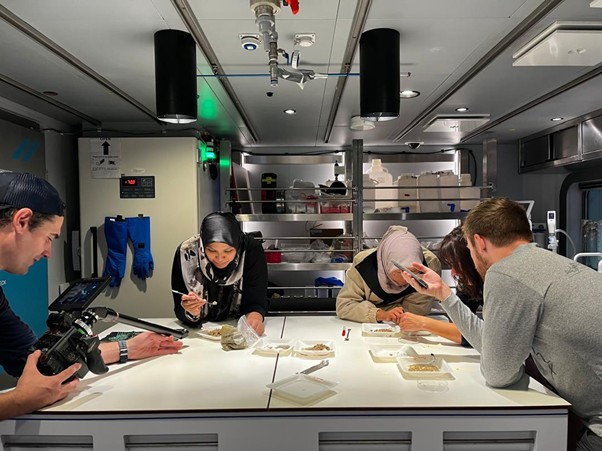
Additionally, the mission also determined the coral health status after the massive coral bleaching event at Pulau Tioman Marine Park using the ReefCloud application, a tool assisted by an AI program. During the mission, training was conducted by the team from New York University (Abu Dhabi) on the methodology and data analysis. The AI-based ReefCloud programme aids coral reef research and conservation by automating the analysis of vast amounts of reef imagery, making it faster and more accurate to monitor reef health and biodiversity.
Meanwhile, the intricate relationship between the physical oceanography studies and biological responses is central to understanding the ecological dynamics and productivity of Pahang coastal waters. Identifying small-scale isotopic variability in Pahang coastal waters promises to serve as a vital baseline for recording isoscapes within Pahang waters, which serves as valuable data in elucidating larger-scale animal migration patterns, foraging ecology, and habitat utilisation in future studies. On top of that, the establishment of sites made accessible using the OceanXplorer provides baseline data and establishes priority sites for long-term monitoring stations for seawater carbonate chemistry (ocean acidification).
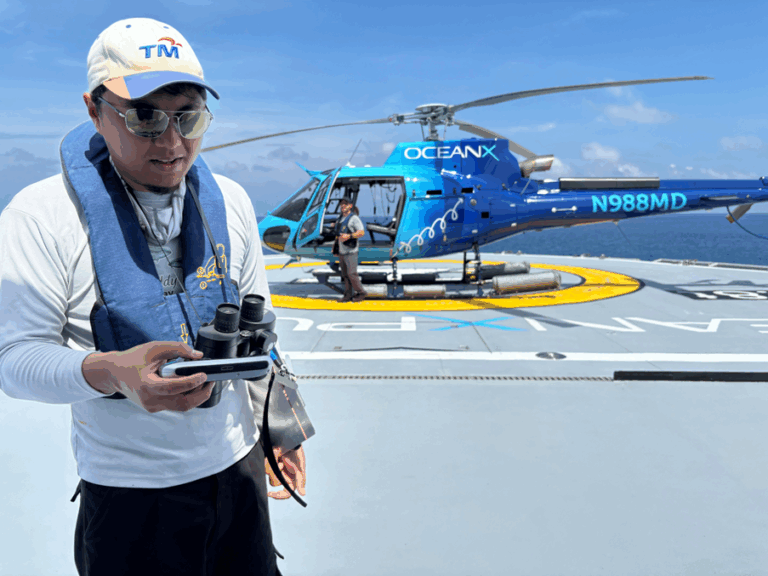
During mission, researchers from the marine endangered species (MES) program also managed to conduct a dedicated aerial survey on the occurrence of marine megafauna, and discovered a healthy population of Indo-Pacific bottlenose dolphins within the coasts.
Overall, this mission not only addresses a significant scientific gap, but is also a stepping stone towards sustainable coastal resource management and conservation efforts in Malaysia. Most importantly, the whole mission is a capacity-development programme for sea exploration with advanced technology for the national scientists who participated in the mission. To understand the relationship between oceanographic conditions and primary productivity in Pahang waters, which can help in predicting changes in marine ecosystem health.
It allows researchers to track changes in coral cover, species composition, and signs of degradation in real time, providing critical data for timely conservation interventions and adaptive management strategies, especially in the face of climate change and human impacts. Mission Malaysia 2024 overall is a capacity-building initiative to enhance ocean exploration and advance cutting-edge technologies in marine research.
This achievement not only elevates Malaysia’s standing in the global marine science community but also underscores INOS and UMT’s leadership in pioneering research and driving innovation for the sustainable exploration of our oceans.