

INOS Signed LOI with Planmalaysia: Bringing Ecosystem-Based Planning to the Forefront

By Wan Izatul Asma Wan Talaat

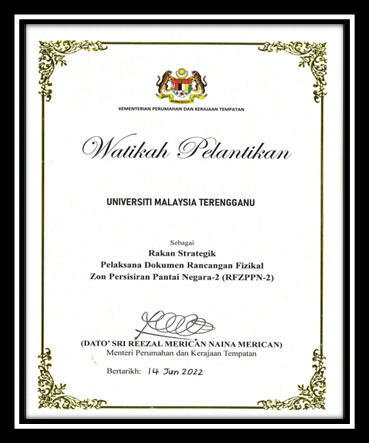
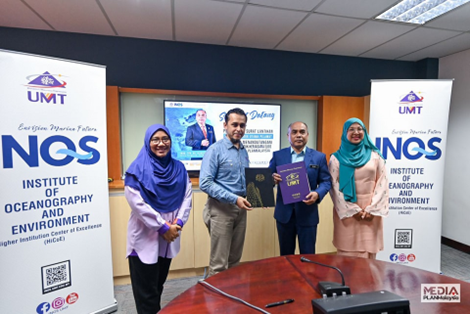
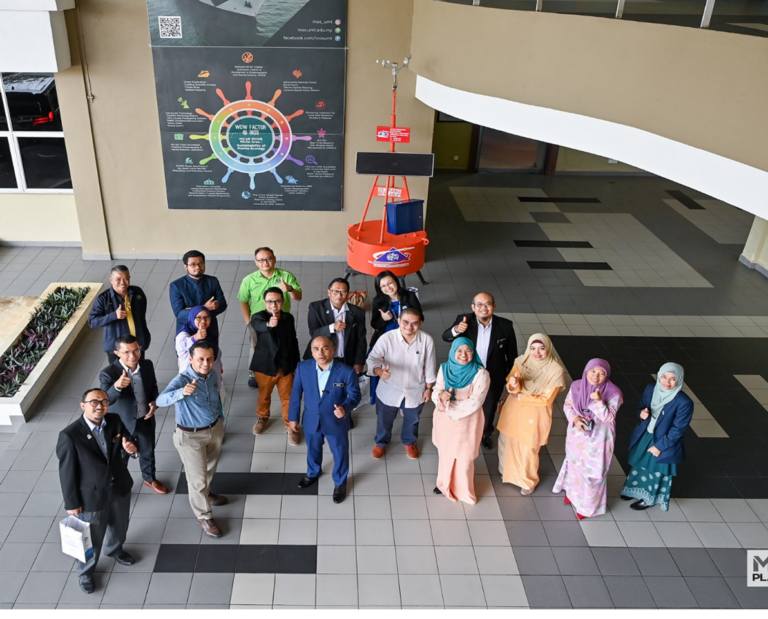
On 27 March 2023, INOS, UMT and the Town and Country Planning Department (PLANMalaysia) has finally cemented our years-long collaboration in science-policy interface through the signing of a letter of intent (LOI). The LOI was signed in conjunction with the official visit of the Director General of PLANMalaysia, Dr Alias Rameli to INOS. Dr Alias has also been presented with his appointment letter as a distinguished visiting research fellow to UMT.

The LOI was signed in view of the past, present and future collaborative works between PLANMalaysia and UMT, which has been recognized through UMT‘s appointment as a Strategic Partner to PLANMalaysia under the recently-launched National Coastal Zone Physical Plan-2 (NCZPP-2).

As the main agency in development planning at the federal, state and local levels, PLANMalaysia holds a huge responsibility in ensuring that land-use planning of terrestrial and marine space is carried out sustainably. To do that, ecosystem-based planning is necessary to balance between socio-economic objectives and environmental conservation. Hence, as a leading institution in coastal and marine research, UMT is more than capable to facilitate informed decision making for sustainable land-use planning.

One such example is through Marine Spatial Planning (MSP), which is an ecosystem-based approach and a public policy process for a society to better determine how the ocean and the coasts are sustainably used and protected – for now and for the future generations. MSP has been set as a thrust action under NCZPP-2 and INOS, UMT will be the lead research institution in MSP implementation through its ongoing joint-project with Fujian Institute for Sustainable Ocean, Xiamen University, China (FISO-XMU).

Abstract

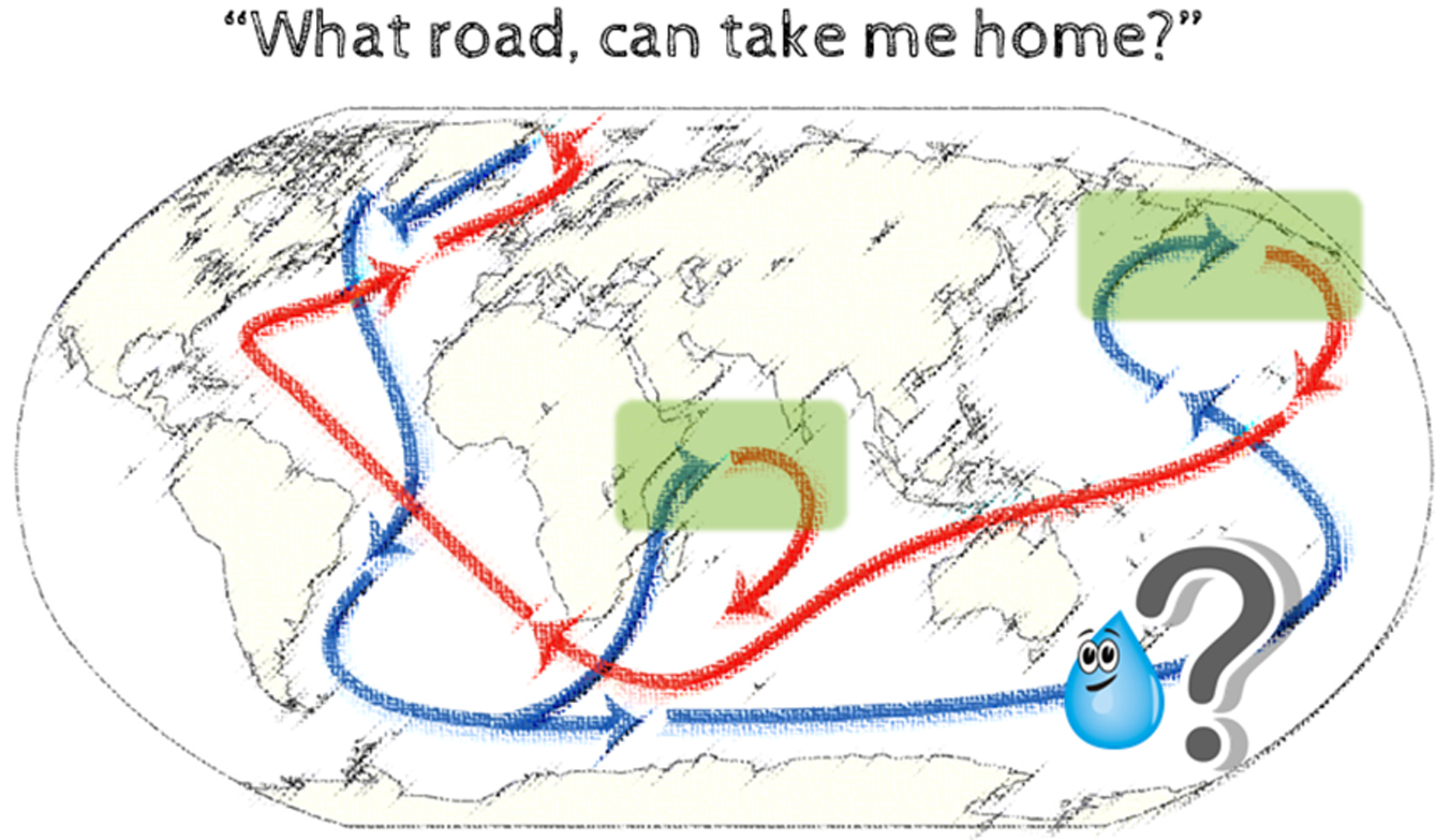
While the sinking formation of Antarctic Bottom Water (AABW) is well understood, how this bottom water "returns home" through upwelling within ocean basins, particularly the Indo-Pacific, remains shrouded in uncertainty. In the 1960s, Munk’s classic "Abyssal Recipes" theory sought to explain these abyssal flows, yet later observations exposed two significant conflicts with real-world data. In 2016, Ferrari, McDougall, and colleagues proposed the "Towards a New Abyssal Recipe" framework, introducing bottom boundary layer (BBL) upwelling to address Munk’s inconsistencies. Drawing on recent evidence of a potential cooling trend in the deep ocean, this talk revisits these debates, offering a fresh interpretation of Munk’s discrepancies and proposing a new mechanism for abyssal upwelling in the Indo-Pacific. It contributes to the ongoing quest to unravel how bottom waters complete their global journey.
Presented by: Prof. Dr. HAN Lei
Affiliation: China-ASEAN College of Marine Science, Xiamen University, Malaysia
Address: Sepang, Selangor, Malaysia



This will close in 0 seconds