Gotong-Royong and Tree Planting at Kampung Tanjung Gelam (Terengganu, Malaysia):
Community Spirit Towards Coastal Sustainability
By Effi Helmy Ariffin (INOS)
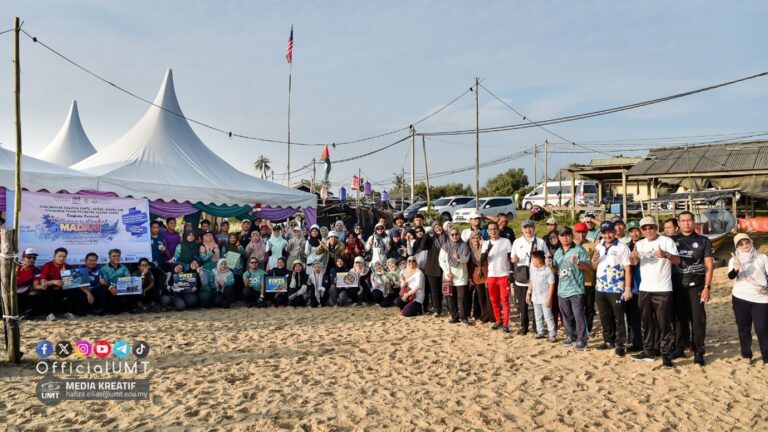
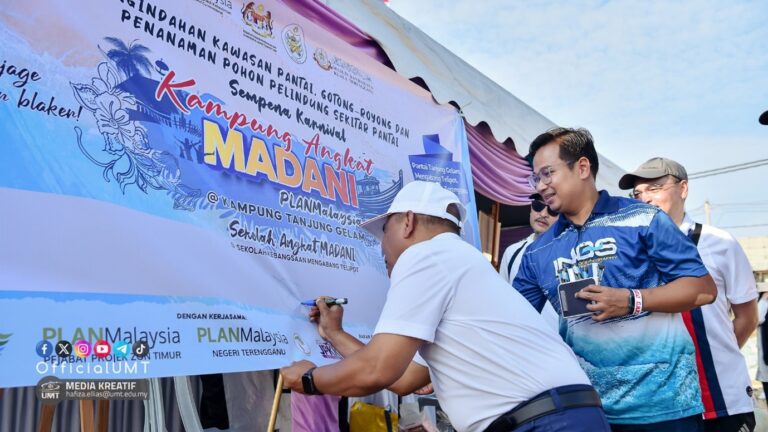
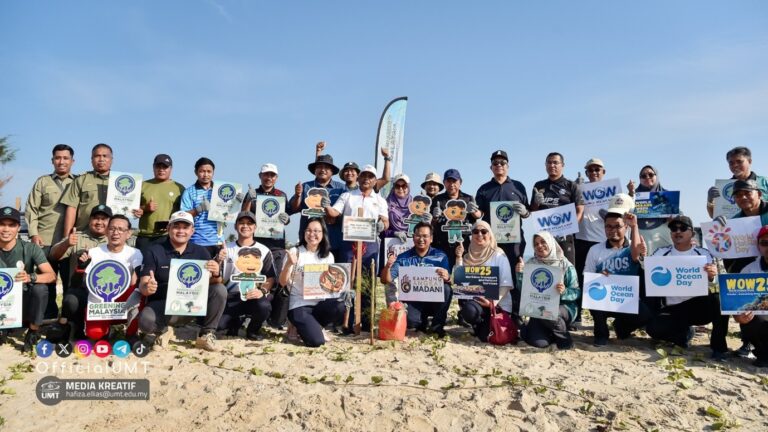
On 29 June 2025, the Institute of Oceanography and Environment (INOS), Universiti Malaysia Terengganu (UMT), in collaboration with PLANMalaysia and Geng Plastik Ija (GPI), successfully organised a Gotong-Royong and Coastal Tree Planting Programme at Pantai Tanjung Gelam, Kuala Nerus, Terengganu (Malaysia). The initiative was part of the Kampung Angkat MADANI (KAM) Project, an effort to empower local communities through environmental conservation and sustainable practices.
The programme carried a clear purpose: to preserve the coastline of Tanjung Gelam while instilling a deeper sense of responsibility among the community towards the environment. Coastal conservation is a pressing issue in Malaysia, particularly with the growing threat of erosion. By introducing activities such as tree planting and beach cleaning, the programme not only addressed immediate environmental challenges but also created opportunities for public awareness and education.
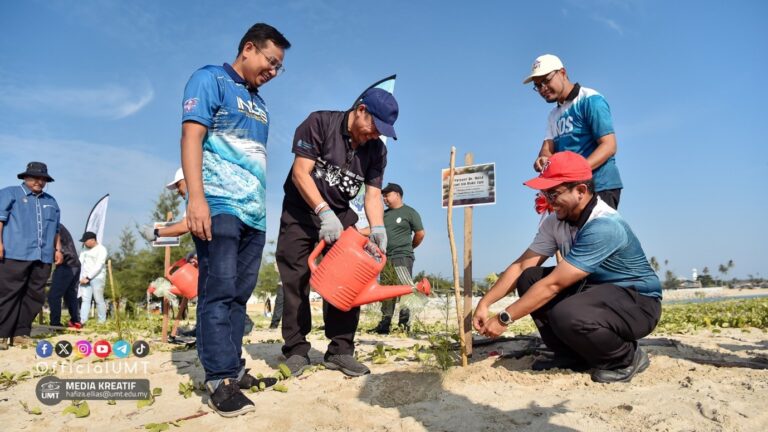
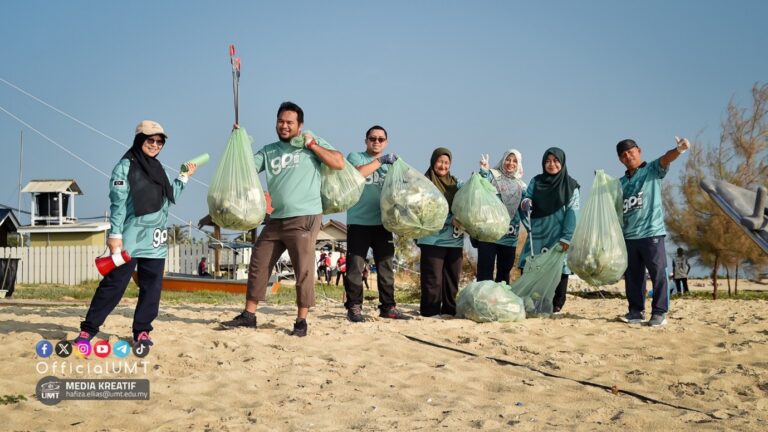
The day began with the gathering of more than 130 participants, comprising villagers, university students, representatives from government agencies, and non-governmental organisations. Together, they embarked on beach cleaning activities, successfully collecting around 140 kilograms of waste ranging from plastics and driftwood to other debris. This collective effort highlighted both the scale of pollution affecting the coastline and the strong sense of cooperation needed to tackle it. At the same time, the planting of 66 coastal trees, including species such as Rhu, Ketapang, and Legundi, provided a practical step towards creating natural barriers against erosion. These trees, carefully selected for their ecological function and adaptability, are expected to play a long-term role in reducing wave impact, stabilising the coastline, and enhancing the natural beauty of the area.
Beyond physical activities, the programme also emphasised knowledge sharing and community engagement. Educational booths and exhibitions were set up, offering participants insights into the ecological importance of coastal vegetation. A particularly unique highlight was the demonstration of Legundi leaves as an ingredient for the traditional kuih ondeh-ondeh, showing how coastal plants hold not only environmental but also cultural and economic value. These creative engagements reinforced the idea that conservation efforts can be both practical and meaningful when linked to daily life.
The event was further strengthened by the presence of distinguished guests, including Datuk TPr Dr. Alias bin Rameli, Director General of PLANMalaysia, and Professor Dr. Zainudin bin Bachok, Director of INOS, alongside representatives from the Department of Irrigation and Drainage (JPS), the Terengganu Forestry Department, Majlis Bandaraya Kuala Terengganu (MBKT), and the Kuala Nerus District Office. Their participation reflected the strong institutional support behind the programme and highlighted the importance of multi-stakeholder collaboration in addressing environmental challenges.
The success of the Gotong-Royong and Tree Planting Programme at Kampung Tanjung Gelam demonstrates the effectiveness of community-driven action in environmental conservation. It showcased how collaboration between universities, government agencies, NGOs, and local villagers can lead to tangible improvements in coastal resilience. More importantly, it reflected the spirit of unity and cooperation that is central to the MADANI framework, where people, knowledge, and action converge to produce lasting benefits.
Looking ahead, INOS hopes to see similar programmes extended to other coastal areas, thereby multiplying their impact. By blending scientific knowledge with community participation, initiatives like these not only address environmental issues but also foster stronger, more resilient communities. The event stands as a testament to INOS’s ongoing commitment to nature-based solutions in coastal management and reaffirms UMT’s role as a national leader in oceanographic and environmental research.