Geohazards & Marine Solutions (GeMS)
Overview
The Geohazards & Marine Solutions (GeMS) programme at INOS focuses on multidisciplinary research into marine-geological hazards (such as submarine landslides, coastal erosion, seabed instability) and developing solutions for sustainable management of these risks in the marine and coastal environment.
Key Research Themes
Submarine Geohazards – Mapping and characterising seafloor instability, landslides, and sediment dynamics in continental margins and shelf regions.
Coastal Erosion & Shoreline Change – Investigating drivers of erosion, shoreline retreat and devising mitigation/adaptation methods for tropical coastlines.
Sediment Transport & Morphodynamics – Understanding sediment flux, seabed morphology evolution, and their roles in hazard development.
Risk Assessment & Early Warning – Developing hazard-models, geospatial hazard maps, and early-warning frameworks for marine/coastal hazards.
Solution Innovation – Applying engineering solutions (e.g., seabed stabilisation), nature-based solutions (mangroves, coral reefs) and policy instruments to reduce risk.
Capabilities & Infrastructure
High-resolution multibeam echo-sounders, side-scan sonar, ROV systems for seabed mapping.
Shoreline monitoring using UAVs, LiDAR and terrestrial laser scanning.
Geotechnical sampling (sediment cores, seabed stability testing) and hydrodynamic modelling tools.
GIS and remote-sensing platforms for hazard mapping and spatial analysis.
Partnerships with industry, government and international research networks.
Impact & Applications
Providing hazard maps and risk assessments to support coastal planning and offshore development.
Informing policy and management for coastal resilience in the face of sea-level rise, storms and human activities.
Enabling early-warning systems for coastal and subsea infrastructure.
Contributing to regional capacity building in Southeast Asia for marine/geohazard science.
Mission & Objectives
To identify, characterise, and monitor marine geohazards in tropical environments (e.g., Malaysia and the South China Sea region).
To develop innovative solutions (engineering, policy, ecosystem-based) that mitigate geohazard impacts on coastal and offshore communities and infrastructure.
To advance knowledge transfer and capacity building in geohazard science for industry, government and society.
To foster interdisciplinary collaboration across geosciences, oceanography, coastal engineering, ecology and socio-economics.
People & Collaboration
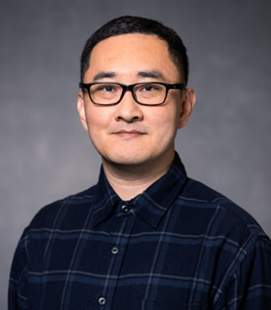
The GeMS programme is led by Associate Prof. Dr. Effi Helmy bin Ariffin, an expert in coastal dynamics, erosion management and marine geoscience. The team comprises geoscientists, marine engineers, oceanographers and coastal managers, working with stakeholders from academia, industry and government.