

By Azza Jauhar Ahmad Tajuddin

In 2018, I started to be actively involved in community-based learning activities. Living by the beach of Batu Rakit, Terengganu, I encouraged the undergraduates to share their knowledge with the younger learners in the primary schools around the campus.

Creating meaningful activities to increase the younger learners’ ocean literacy were the main aim of the university social responsibility (USR) visits to schools.

What was discovered during the longitudinal study, the misconceptions about the ocean by the little ones from the coastal community were worrying.

The issue created an opportunity for us to ensure that young learners learn, unlearn and relearn facts about the ocean.

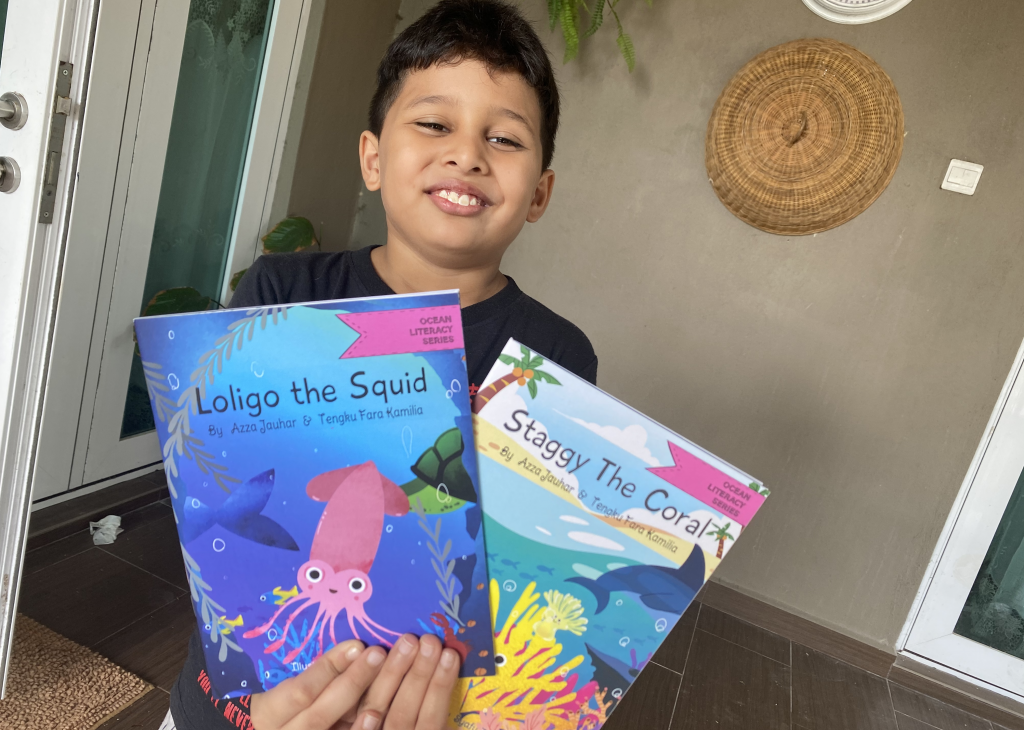
How? Illustrated storybooks.

From the 21 USR sessions, we discovered that the kids love story time, even the big kids. Then we discovered that we do not have kids storybooks about our ocean and its creatures in Malaysia.

What did I do? I teamed up with a bio-marine pal, Fara, and we started drafting our first and second book (over coffee).

Late last year, Penerbit UMT agreed to publish the first-ever children’s book under its wings, and being the ocean fanatics, we were elated.

‘Staggy the Coral’ and ‘Loligo the Squid’ try to correct misconceptions and address serious local problems, such as plastic pollution and overfishing, in a simple way.

Though the book was written in English, vivid illustrations help overcome language barriers, and colourful pages could reduce young learners’ anxiety.

The ocean literacy series integrate Quranic values, science, arts and language. By doing so, learners begin to see relationships and connections across the disciplines, which makes learning meaningful.


Please visit our website: https://youolls.com/

Dr. Azza Jauhar Ahmad Tajuddin currently holds a position as Lecturer at English learning Centre (ELC, PPAL)

Abstract

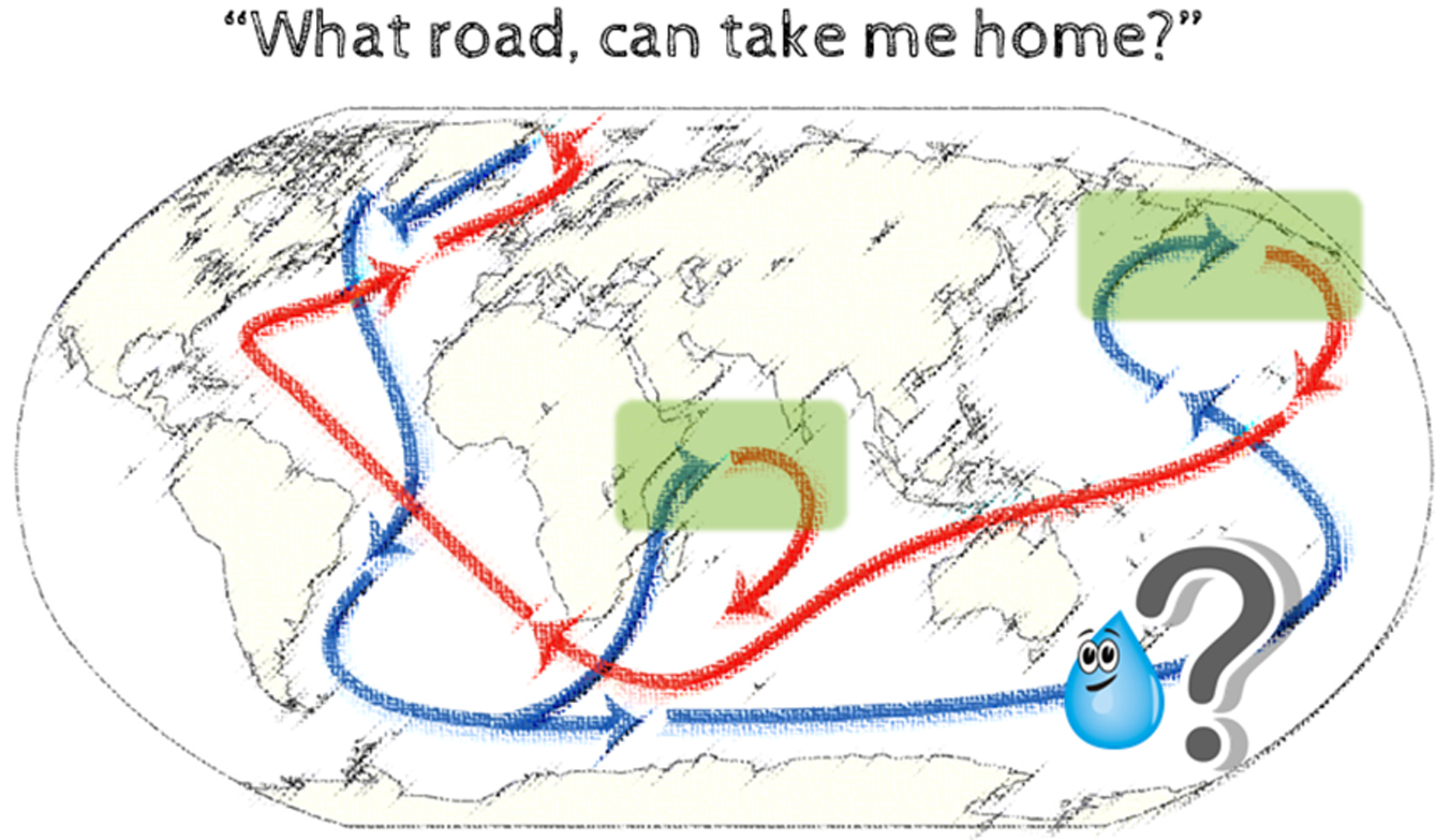
While the sinking formation of Antarctic Bottom Water (AABW) is well understood, how this bottom water "returns home" through upwelling within ocean basins, particularly the Indo-Pacific, remains shrouded in uncertainty. In the 1960s, Munk’s classic "Abyssal Recipes" theory sought to explain these abyssal flows, yet later observations exposed two significant conflicts with real-world data. In 2016, Ferrari, McDougall, and colleagues proposed the "Towards a New Abyssal Recipe" framework, introducing bottom boundary layer (BBL) upwelling to address Munk’s inconsistencies. Drawing on recent evidence of a potential cooling trend in the deep ocean, this talk revisits these debates, offering a fresh interpretation of Munk’s discrepancies and proposing a new mechanism for abyssal upwelling in the Indo-Pacific. It contributes to the ongoing quest to unravel how bottom waters complete their global journey.
Presented by: Prof. Dr. HAN Lei
Affiliation: China-ASEAN College of Marine Science, Xiamen University, Malaysia
Address: Sepang, Selangor, Malaysia


This will close in 0 seconds