UMT and Aquaria KLCC Strengthen National Coral Reef Restoration
with Phase 3 Launch of Guardian of the Reefs Campaign
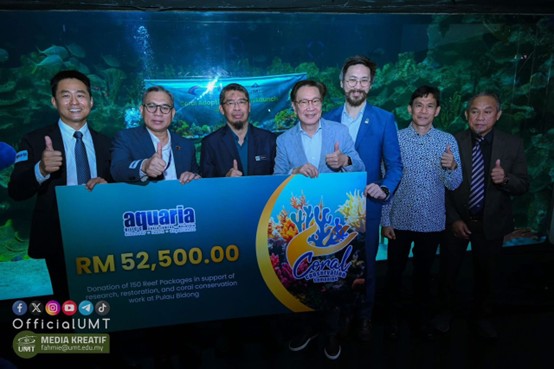
Coral Adoption Program kickstart by Aquaria KLCC by adopting 150 Reef Packages to support coral research, restoration, and conservation efforts at Pulau Bidong, value of RM52,500.
By Tan Chun Hong (INOS / FSSM)
Universiti Malaysia Terengganu (UMT), in partnership with Aquaria KLCC, has launched Phase 3 of the Guardian of the Reefs campaign, a national initiative focused on restoring and protecting Malaysia’s coral reef ecosystems. This latest phase introduces a new Coral Adoption Program designed to scale up reef rehabilitation through structured community and corporate participation.
The launch ceremony, held at Aquaria KLCC, was officiated by Dato’ Simon Foong, Chairman of Aquaria KLCC; Dato’ Haji Azahari bin Haji Othman, Deputy Director General (Development) of the Department of Fisheries Malaysia; and Professor Ir. Ts. Dr. Mohd Zamri bin Ibrahim, Vice Chancellor of UMT. As part of the event, guests witnessed a live coral fragging demonstration, which illustrated the practical scientific methods being applied in reef restoration efforts.
The coral fragging session, led by marine researchers from UMT’s Faculty of Science and Marine Environment, highlighted the laboratory-to-fieldwork link critical to reef conservation. Coral fragments, or nubbins, are grown under controlled conditions and later outplanted onto degraded reefs, where they are monitored for survival and growth. This hands-on, evidence-based approach reflects UMT’s long-term commitment to scaling up reef rehabilitation using sound marine science and technology.
Building on the achievements of previous campaign phases, the new Coral Adoption Program enables the public and corporations to directly support coral restoration at sites such as Pulau Bidong. This location, a long-standing field station for UMT’s marine research, served as the main restoration site during Phase 2 in 2024, where over 1,000 coral nubbins were successfully planted through an RM200,000 collaboration with Aquaria KLCC.
Phase 3 aims to restore an additional 3,000 coral nubbins and expand the coral garden to 2,000 square metres by 2027. This expansion is backed by community and industry support through tiered adoption packages, which include updates on restoration progress, educational materials, and involvement in field activities. During the launch, Aquaria KLCC presented a symbolic cheque worth RM52,500, representing the adoption of 150 coral packages sponsored by staff and visitors.
Members of the public and organisations interested in contributing to the restoration of Malaysia’s coral reefs can now participate through the Coral Adoption Program at:
https://catalog.billplz.com/UMT/payment-form/coral-conservation
The Coral Adoption Program also serves as a platform for expanding UMT’s research-based interventions. Ongoing monitoring of coral survival rates, growth patterns, and habitat biodiversity allows researchers to refine best practices in coral handling, transplantation techniques, and long-term maintenance. These data contribute to national and regional knowledge on reef resilience, especially amid increasing stressors from warming seas, pollution, and coastal development.
Coral reefs in Malaysia support diverse marine life and coastal communities, yet they are increasingly under threat. The Guardian of the Reefs initiative reflects a growing awareness that marine restoration cannot be achieved by researchers alone. By connecting scientific efforts with public and private sector support, the programme creates a stronger, more inclusive foundation for coral reef recovery.
UMT remain committed to expanding these efforts through partnerships, outreach, and applied marine science. With the successful launch of Phase 3, the path forward is clear: combining research excellence with broad-based engagement offers the most promising route to securing the future of Malaysia’s reefs.
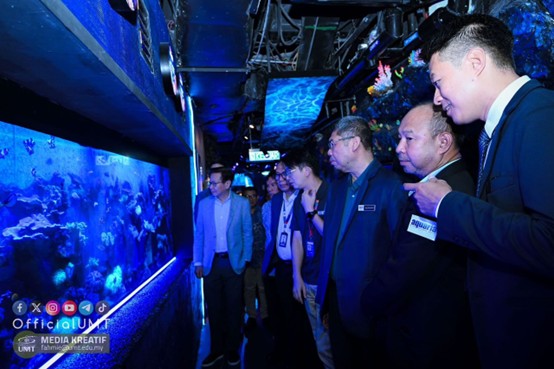
Visit to the newly launched Coral Walk Exhibition at Aquaria KLCC, joined by VIP guests and media representatives.
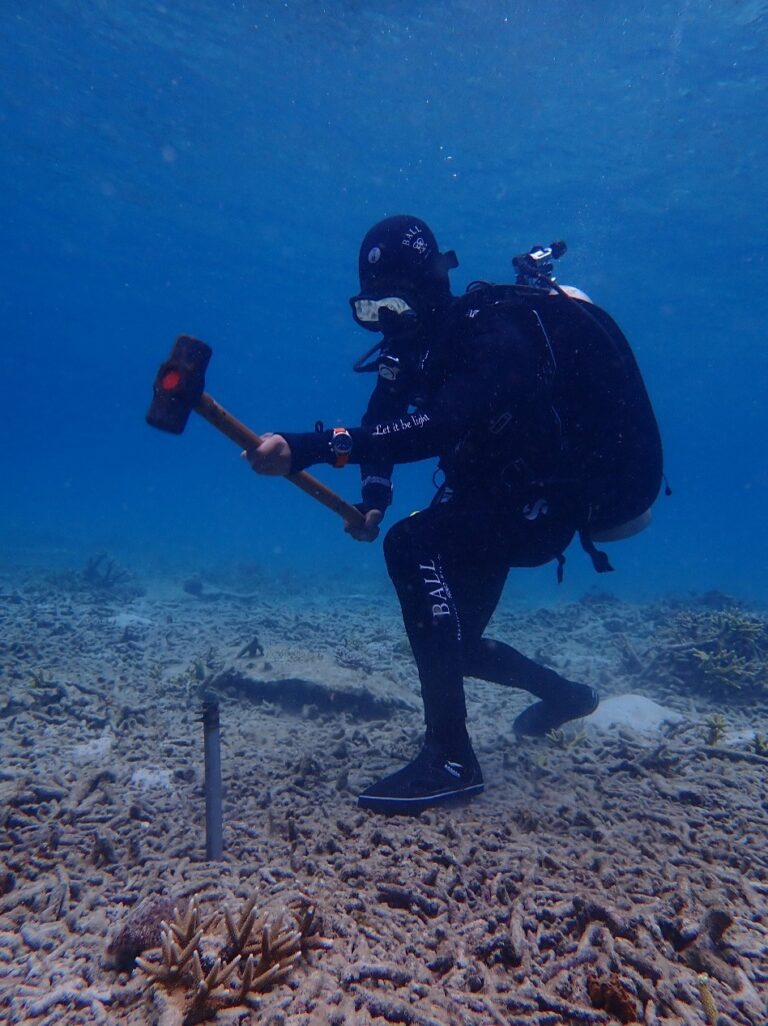
A diver securing a metal pole into the rubble substrate at Pulau Bidong to rehabilitate areas with dead and broken coral fragments.
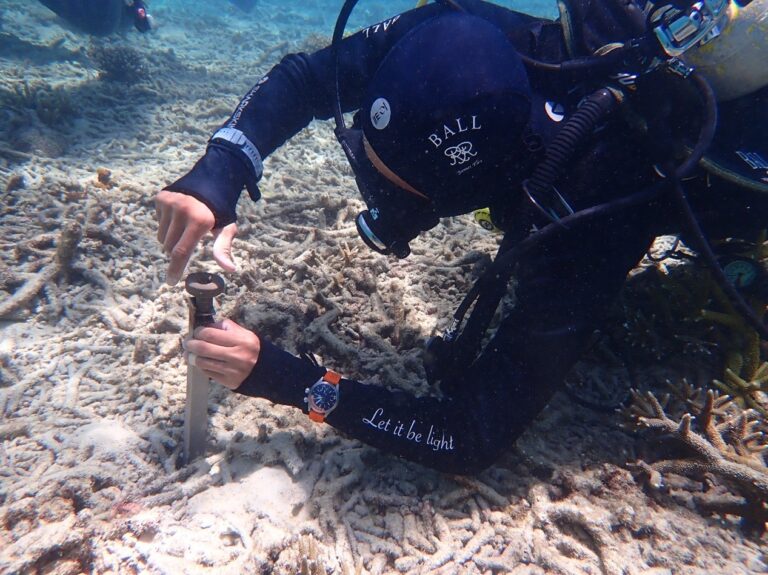
A diver attaching a coral plug to the metal pole structure as part of the reef restoration work at Pulau Bidong.
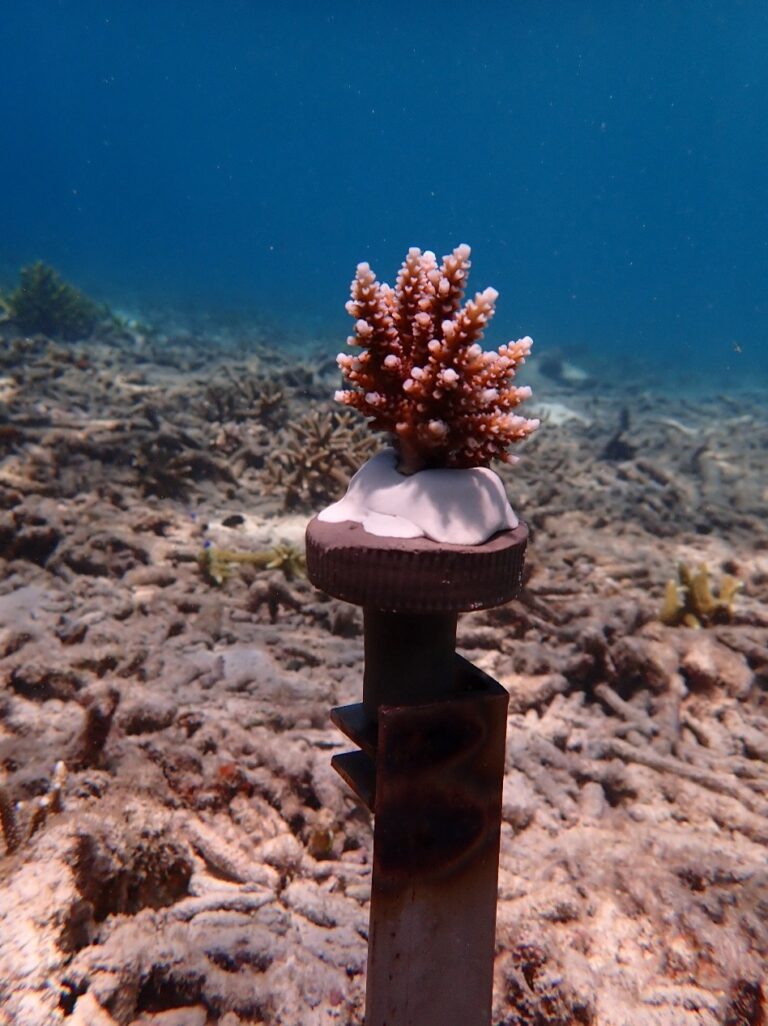
Acropora corals are attached to the One-For-All structure.