Where Business Meets Biodiversity:
PUNB's Partnership for Sea Turtle Conservation
By Faizah Aplop (INOS)
From Boardroom to Beach
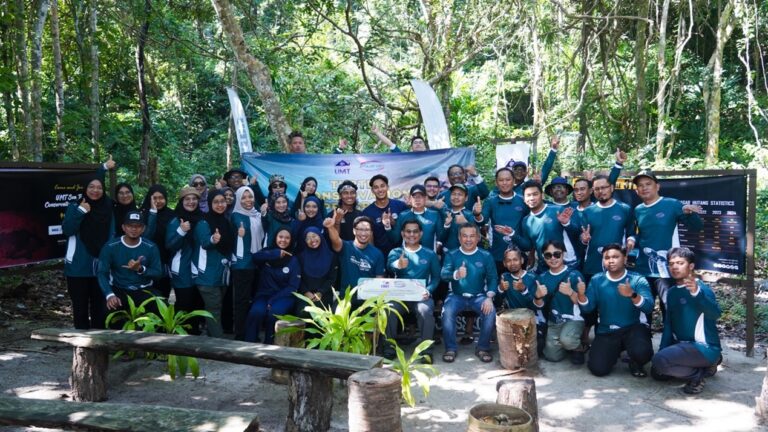
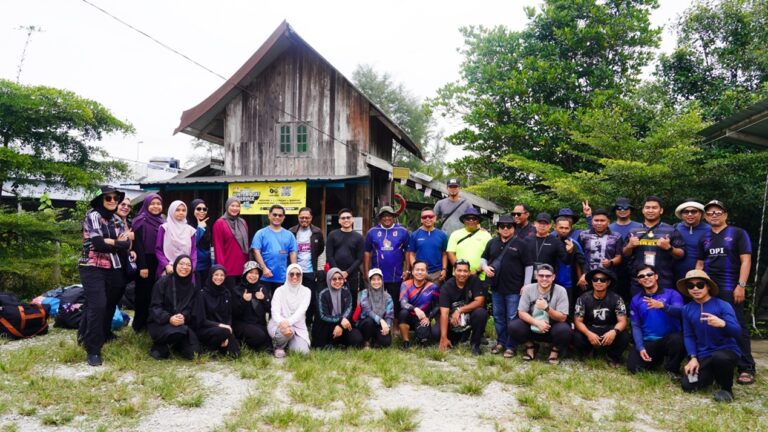
Perbadanan Usahawan Nasional Berhad (PUNB), a government-linked organisation renowned for its work in developing Bumiputera entrepreneurs through innovative financing, training, and mentorship. However, its commitment extends beyond business, as it is also extending its leadership to environmental stewardship and community well-being through its corporate social responsibility (CSR) initiatives. In a significant step toward environmental conservation, PUNB recently participated in a sea turtle volunteer programme at Chagar Hutang Turtle Sanctuary (CHTS), Pulau Redang, from the 2nd to the 5th of July 2025. They mobilised 35 employees, including top leadership, for this four-day sea turtle conservation programme there. This initiative saw active participation from CEO Mr. Izwan Zainuddin, General Manager of Operations Mr. Fauzi Zakaria, and Head of Marketing & Communications Mr. Ahmad Nazlee Idris, who joined frontline conservation efforts alongside staff. Beyond volunteerism, PUNB also reinforced its sustainability commitment through sponsorship of critical upgrades to the sanctuary’s eco-campsite. This leadership-led initiative underscores PUNB’s holistic approach to corporate responsibility, where environmental action begins at the highest levels of the organisation.
Hands-on Conservation: Volunteer Efforts at Chagar Hutang
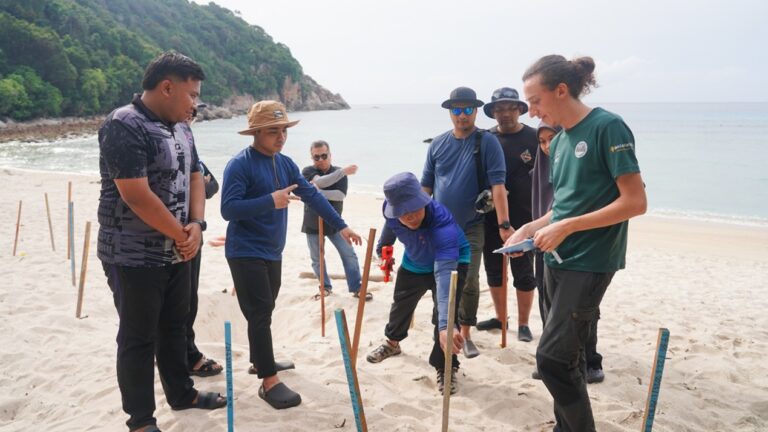
For four days, the dedicated PUNB team went beyond their corporate roles to actively participate in vital conservation efforts at the Chagar Hutang Turtle Sanctuary. Under the guidance of SEATRU young marine biologists, they participated directly in nest monitoring and habitat preservation activities. They spent their nights on the beach, conducting meticulous night patrols to monitor nesting turtles. This hands-on work was crucial for SEATRU’s research, as data is collected diligently on nesting patterns, and information is analysed, which then contributes to a deeper understanding of the local turtle population.
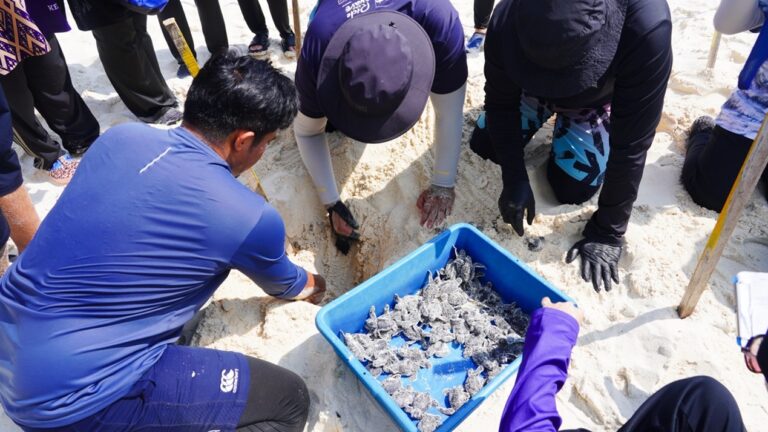
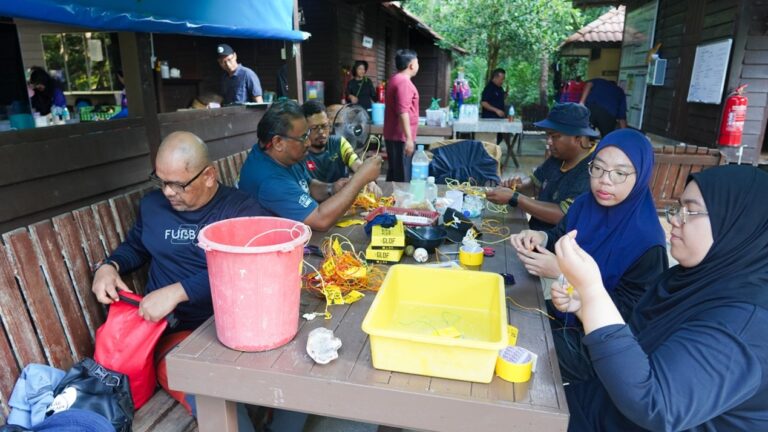
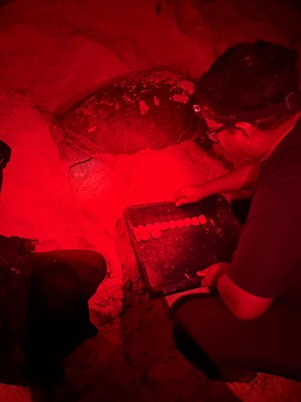
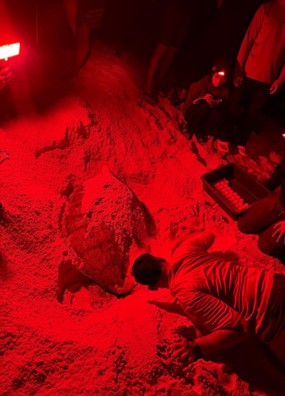
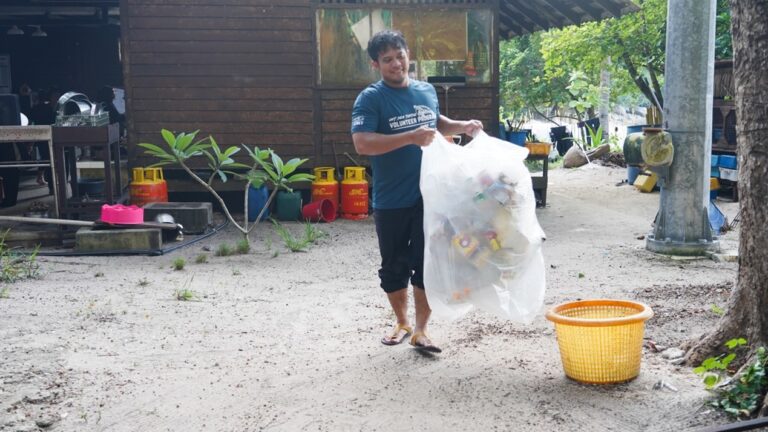
The PUNB team’s involvement and commitment extended to giving the next generation of turtles a fighting chance. To protect eggs from predators and high tides, they performed careful egg relocations to a safer, more secure hatchery. Their efforts also included comprehensive beach clean-ups, where they removed plastic debris and other harmful waste, ensuring a pristine and safe environment for both nesting mothers and their future hatchlings. Contributing a total of 2,800 volunteer hours, their work supports PUNB’s dedication to the United Nations Sustainable Development Goals, specifically SDG 12: Responsible Consumption and Production, and SDG 13: Climate Action.
Sponsoring a sustainable future: Upgrading the Eco-Campsite
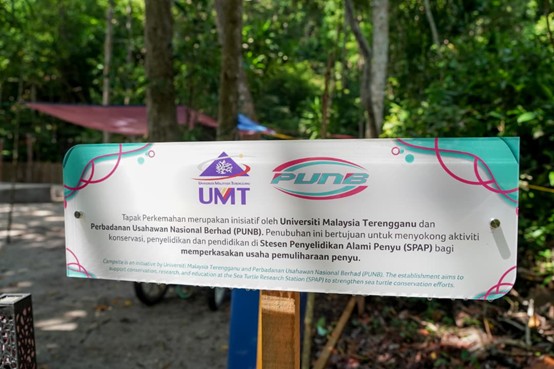
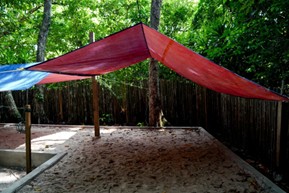
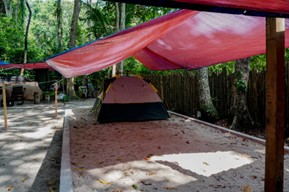
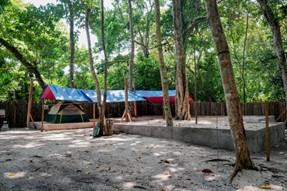
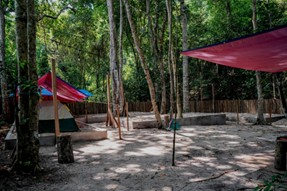
Demonstrating a tangible commitment to environmental stewardship, PUNB has donated RM15,000 to enhance SEATRU’s research capabilities at CHTS. This strategic funding directly supports the upgrade of critical campsite facilities, improving living conditions for researchers and volunteers engaged in year-round conservation work. The upgraded facilities offer more comfortable accommodations for 20 participants at the same time, including raised sleeping platforms and secure barriers that provide protection against flooding from heavy downpours and help deter dangerous crawling creatures. Beyond financial support, this initiative represents PUNB’s philosophy of purposeful corporate citizenship. For PUNB participants, the programme transcended a typical CSR activity. It became a transformative experience that deepened environmental awareness, strengthened team purpose, and fostered genuine emotional connection to marine conservation.
Marine Conservation Knowledge Sharing
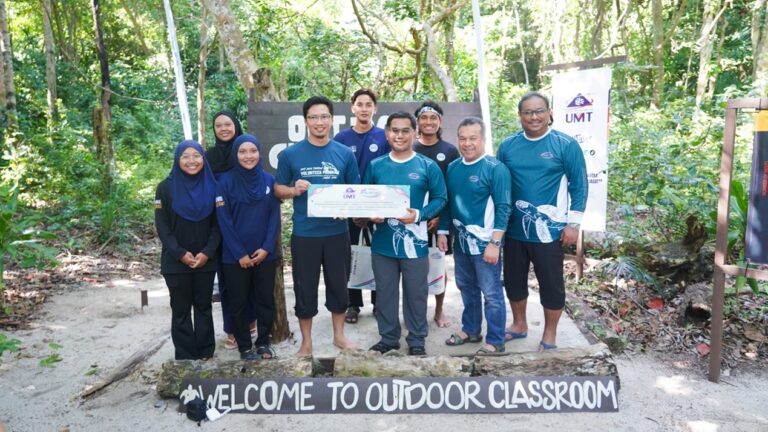
On the last day of the volunteer programme, Assoc. Prof. Dr. Mohd Uzair bin Rusli, Head of the Field Research Laboratory and renowned expert in animal physiology and turtle conservation, conducted an immersive educational session for PUNB’s team at CHTS’s outdoor classroom. The workshop provided critical insights into marine ecosystem dynamics and the pressing challenges in sea turtle conservation efforts. Dr. Mohd Uzair shared firsthand knowledge about the operational hurdles faced by SEATRU, including manpower shortages for volunteer programmes, financial constraints limiting conservation capabilities, and emerging threats to marine biodiversity. This eye-opening session equipped PUNB participants with a deeper understanding of the sanctuary’s conservation needs, reinforcing the importance of their corporate support and volunteer involvement in protecting these endangered species.
Commitment to Sustainability: The PUNB way
PUNB empowers Bumiputera entrepreneurs through financing and development, driving Malaysia’s economic growth. Beyond the boardroom, the organisation’s commitment extends to the beaches of Chagar Hutang Turtle Sanctuary. By funding eco-campsite upgrades and having employees volunteer with SEATRU’s scientific conservation efforts, PUNB seamlessly aligns business excellence with environmental responsibility. This demonstrates that true leadership creates lasting value for both the economy and ecosystems, proving that corporate success and sustainability can work in harmony.