Research Focus
Therefore, motivated by this issue, Dr Zuraini sought to understand the dynamics of Setiu Wetland from the new river inlet perspective and how efficiently this river mouth would function in removing the contaminants and pollutants from the water body.
Her research is important for several reasons, according to Dr Zuraini. Knowledge gained about the existing water motion and transport processes in Setiu Wetland will be useful in managing the wetland restoration and enhancement projects. In addition, hydrodynamic and ecological information can assist the Department of Fisheries and local committees in determining the best possible location for productive aquaculture farms, as Setiu Wetland is fast developing into a hub of aquaculture activities, and these will support the livelihood of the locals. Also, determination of residence time in Setiu Wetland is believed to help in coastal management and ecological sustainability purposes, especially those related to pollution control.
The study was guided by three objectives, namely, to investigate the tidal influence of Setiu Wetland towards changes in hydrodynamic and water quality, to investigate the residence time within the Setiu Lagoon and how it affects the phytoplankton biomass and nutrients concentration, and to identify the temporal and spatial scales of pollutant transport and distribution associated with river discharges from a coastal management and ecological sustainability perspective.
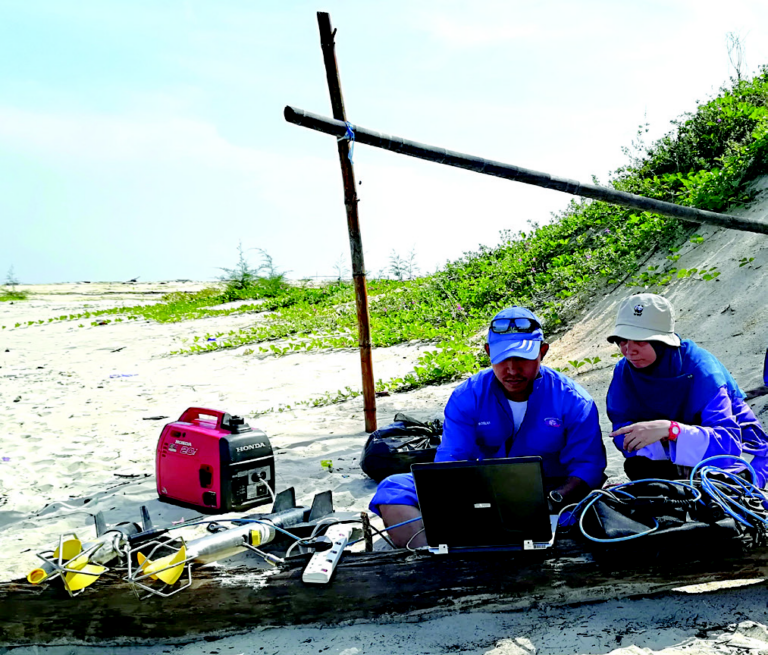
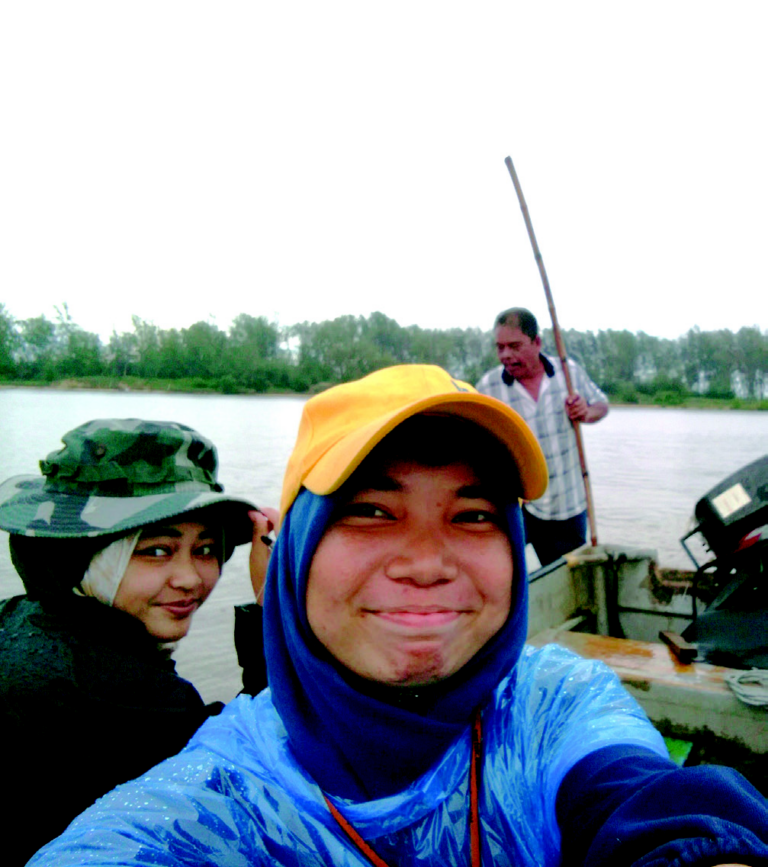
To achieve the objectives of her study, Dr Zuraini carried out research samplings at three different times of the year that corresponded with the dry period of northeast monsoon, southwest monsoon, and wet period of northeast monsoon, they being February, August, and December. Since the study also aimed to observe the interaction between seawater and freshwater, Dr Zuraini positioned ten sampling stations randomly within the four-kilometre river inlet area.
Dr Zuraini collected three kinds of data, which were measurements of physical parameters, nutrients and chlorophyll a analyses, and supplementary data. Physical parameters included temperature, salinity, depth, and current speed and direction. Water samples for nutrient and chlorophyll a analysis purposes were collected at 0.5 metre depth due to the shallow water. Supplementary data included daily rainfall amount and river flow, obtained from the Department of Irrigation and Drainage, and hourly water level, acquired from the tide table provided by National Hydrographic Centre.
Statistical analysis was performed on the environmental parameters to demonstrate relationships among variables. Numerical modelling was also executed to improve the restrictions of field observations while providing a better understanding of the dynamics of the water body.