Main Research Focuses
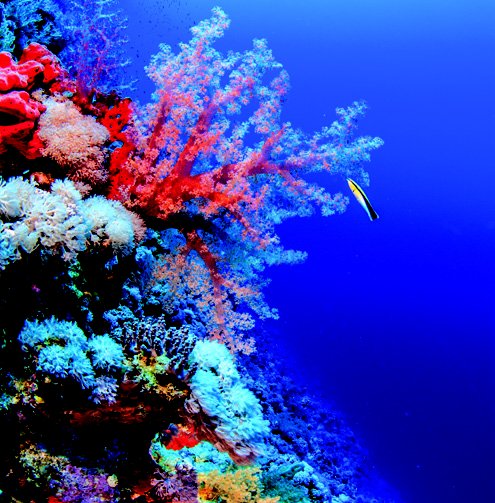
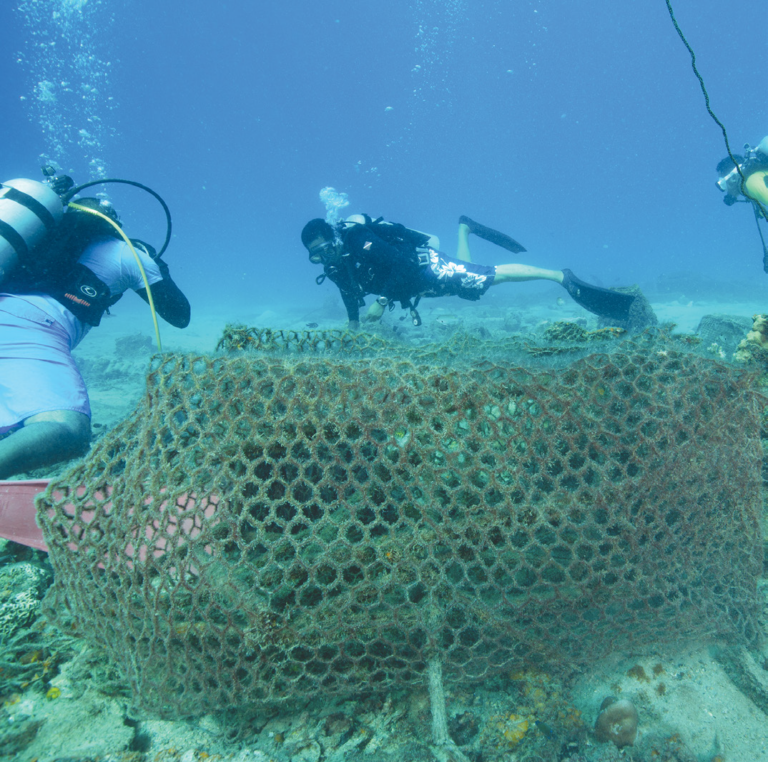
The main research focuses of the CORE research group include coral reef community structure, multiple stressors to the reef ecosystem, reef mapping, artificial reefs, coral reproductive biology and growth, stress response in corals, coral diseases, and socio-economic impact.
Coral reef studies by CORE researchers fall into three categories: broad-scale, medium-scale, and small-scale studies.
An example of broad-scale studies is mapping of marine habitat through acoustic and aerial surveys to obtain a large-scale assessment of the coral reef area. Mapping is conducted at three levels—the first level includes corals and non-corals, the second benthic, or bottom-of-the-sea life forms, and the third hard coral group type. This approach helps researchers to save a lot of time and resources.
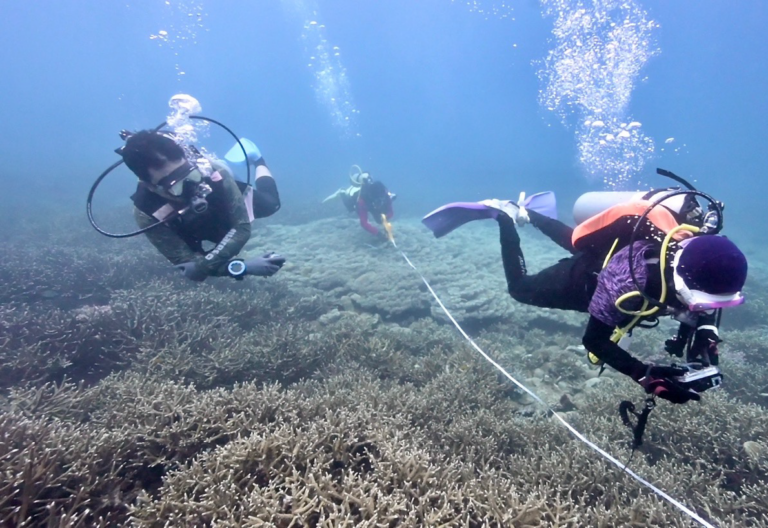
Studies under the medium-scale category are more detailed, and one such example is coral reef community research, carried out to understand the ecological components of the ecosystem. In this type of studies, underwater video equipment is used to record and monitor important biotic and abiotic components in coral reefs. These two components form the ecosystems, the former comprising living things within an ecosystem, including plants, animals, and bacteria, while the latter consisting of nonliving things, such as water, soil, and atmosphere. How these two components interact is crucial in an ecosystem.
Small-scale studies are mainly concerned with ecology, physiology, and biogeochemistry of corals, and the focus of these studies varies, ranging from coral species to cellular levels. Normally assessed in studies under this category are fatty acid biomarkers, oxidative stress, and trophic levels, which are the positions marine organisms occupy in a food web, or the number of steps they are from the start of the food chain. All these assessments are made using different scientific measurements.
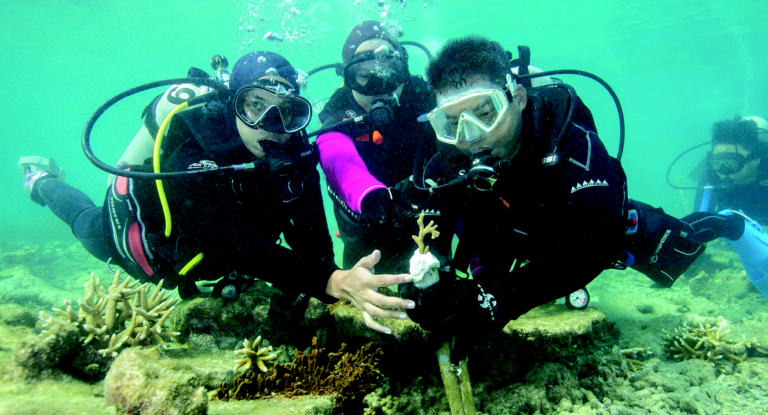
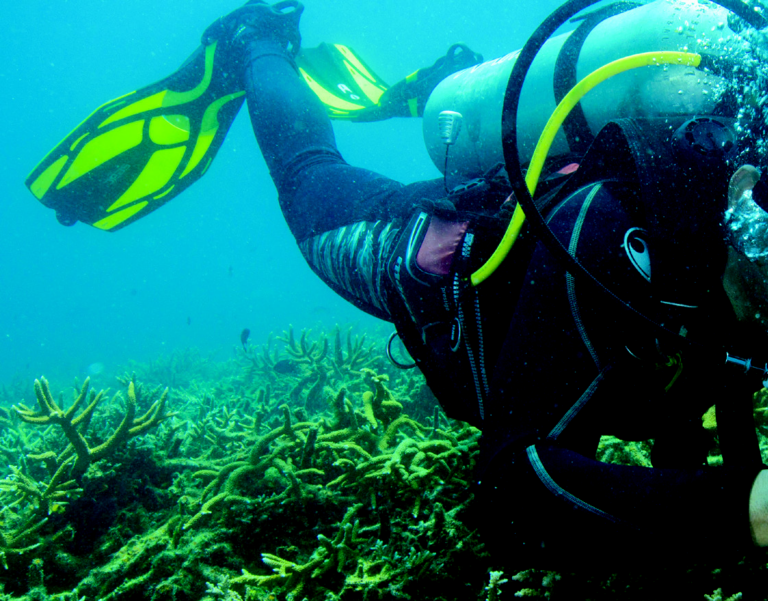
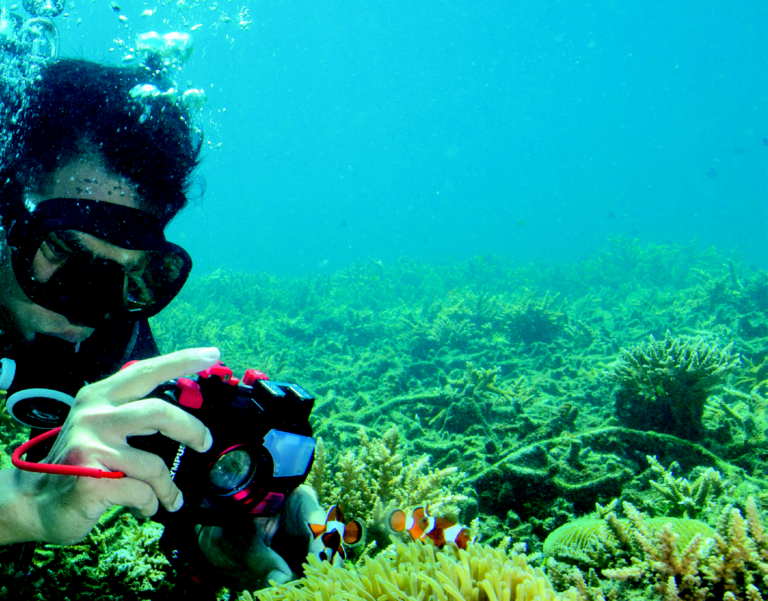
Field surveys at coral reef ecosystems involve SCUBA diving, and surveys are conducted using innovative applications that complement traditional ecological approaches with advancement in techniques. These include coral video transect (CVT) technique, stereo-fish underwater video (Stereo-FUV) system, multi-beam echo sounder (MBES), unmanned aerial vehicle (UAV), and ultrashort baseline (USBL) underwater positioning system.
Each of these applications is used for different purposes. For example, the UAV, or popularly known as drone, is used to capture satellite or airborne images with excellent spatial resolution. The MBES is used in spatial mapping of seafloor habitats.