One of the Leading Minds in Oceanography
Having been working in oceanography for the past 17 years, Professor Fadzil is now one of the leading minds in oceanography in Malaysia.
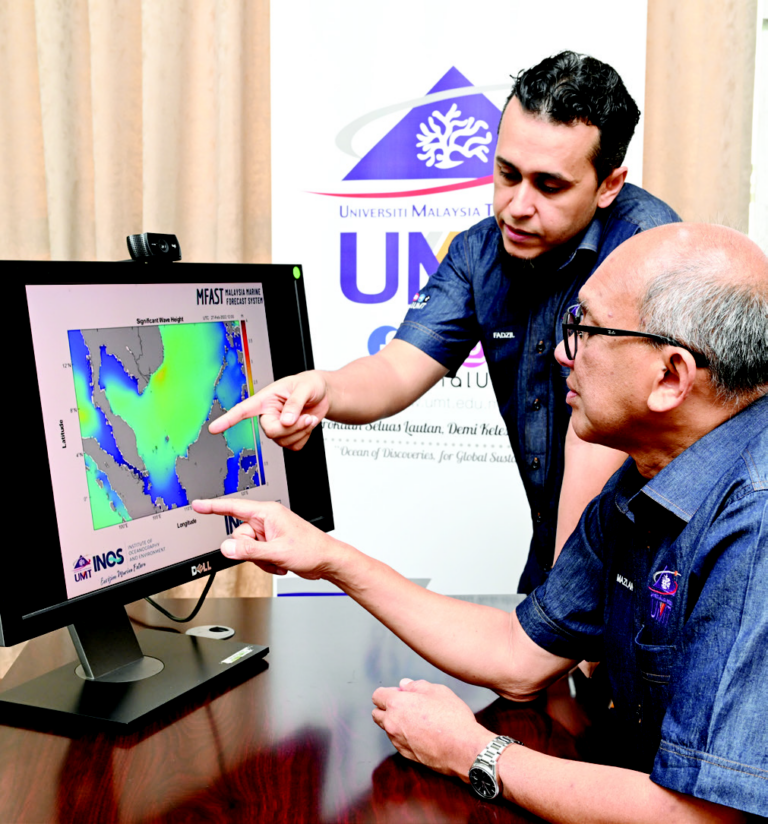
As a lecturer at UMT, he has conducted research in his area of interest, coastal physical oceanography, mainly focusing on field observations and numerical modelling.
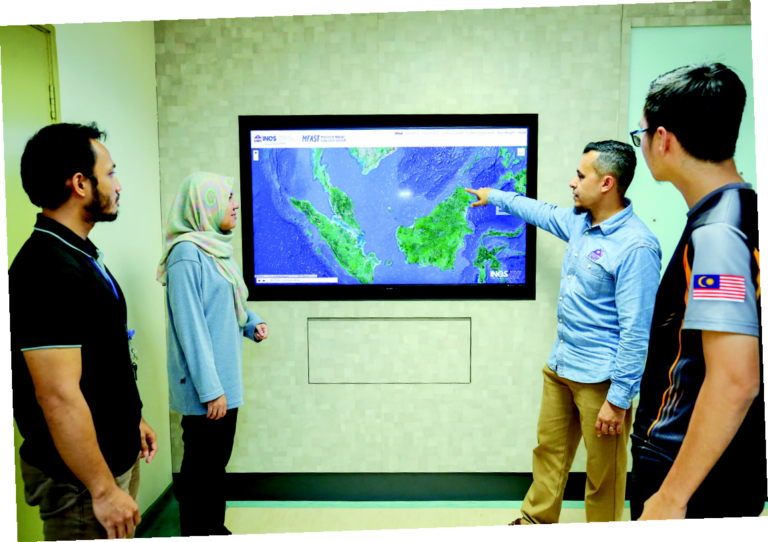
He has actively been studying the southern South China Sea, particularly in terms of ocean currents, wind, and waves and its water masses, focusing on the impact of seasonal changes as well as climate change.
Although working in oceanography, Professor Fadzil has not let his engineering skills go to waste. He has applied them in physical oceanography, enabling him to determine the ocean systems’ behaviour and their impacts on both Malaysia’s coastal regions and the inhabiting communities.
“In Terengganu, these studies are important as the monsoon season has a big influence on the livelihood and economic well-being of the people who live along the coast of the state,” he said.
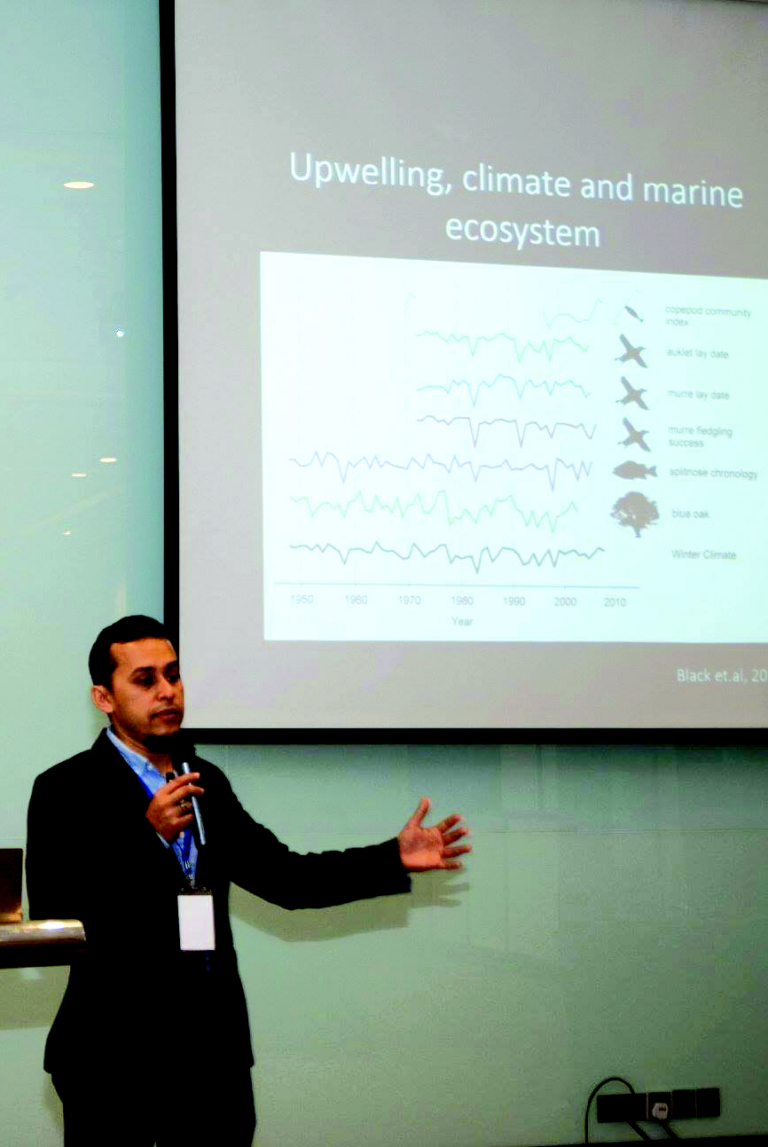
One of the highlights of his study was his discovery of an upwelling system along the east coast of Peninsular Malaysia, turning him into a renowned expert in the dynamics of upwelling system. Upwelling is an oceanographic phenomenon whereby deep, cold water moves towards the ocean surface.
This water contains nutrients that are good for the growth of planktons, the basis of the ocean food chain, thus providing a positive boost to the marine ecosystem.
A young and dynamic academic, Professor Fadzil possesses a vast experience in researching and publishing in his field of expertise.
He has his own research team at UMT, known as the Coastal Oceanography Dynamic (COD) research group. Under his stewardship, the COD team has developed a very significant new knowledge and high-quality research publications on physical oceanography in the country, supplementing the previously inadequate oceanographic profile of the southern South China Sea.
This was possible when in 2014 UMT acquired a research vessel the RV Discovery, research vessel in Malaysia, that changed the course of oceanographic research in the country. Oceanography work was able to be moved further offshore, thus allowing Professor Fadzil’s team to explore new territories in the offshore region. New equipment was also deployed, including the deep ocean buoys that were able to collect long time-series data with various parameters. With new valuable data input, the team managed to publish impactful research on the dynamics of the South China Sea in high-impact journals.