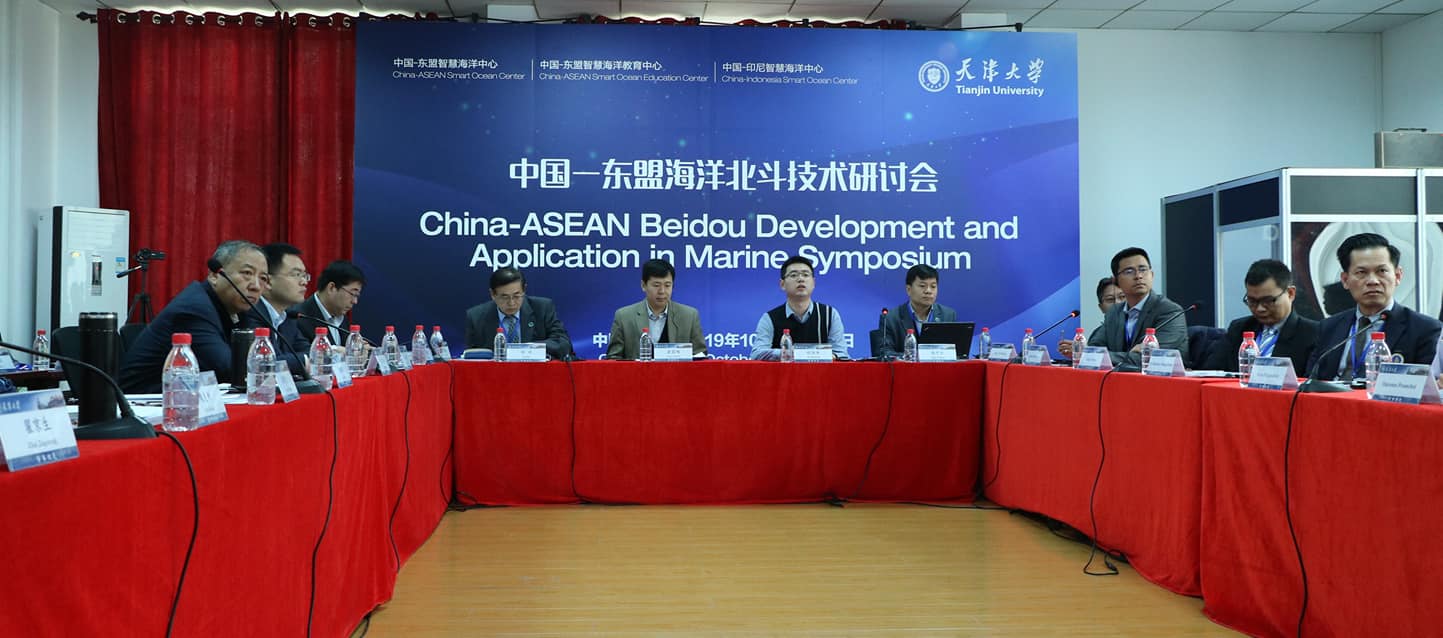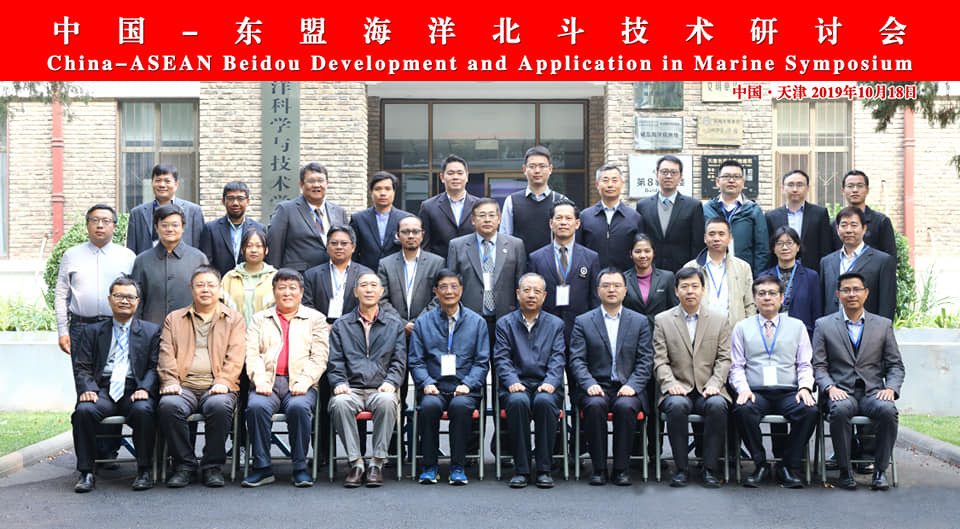
The China-ASEAN Beidou Development and Application in Marine Symposium was hosted by the China-ASEAN Smart Ocean Center at Tianjin University’s School of Marine Science and Technology on October 18th, 2019. The Symposium was presided over by Pan Delu, an Academician of the Chinese Academy of Engineering.
“Beidou serves China and the world”. The Symposium focused on the current situation and prospects of the development of Beidou technology in the marine field, and actively explored international cooperation and research on the marine Beidou technology. It has provided a platform for domestic and foreign researchers to learn and exchange, set up a bridge of communication and cooperation between the two sides, and has been highly praised by the experts and scholars attending the Symposium.
Tianjin University responded positively to the “Belt and Road Initiative”, led the Excellence 9 Chinese universities and 8 ASEAN universities to establish ASEAN-China Network for Cooperation and Exchanges among Engineering and Technology Universities(ACNET-EngTech)in 2014. Based on the platform of the Alliance, the School of Marine Science and Technology established China-ASEAN Smart Ocean Center, China-Indonesia Smart Ocean Center and China-ASEAN Smart Ocean Education Center in 2017, and provided more practical platforms for cooperation and exchanges between Chinese and ASEAN universities.
Source: http://www.tju.edu.cn/english/info/1010/4604.htm